English
 Español
 tiếng việt
 русский
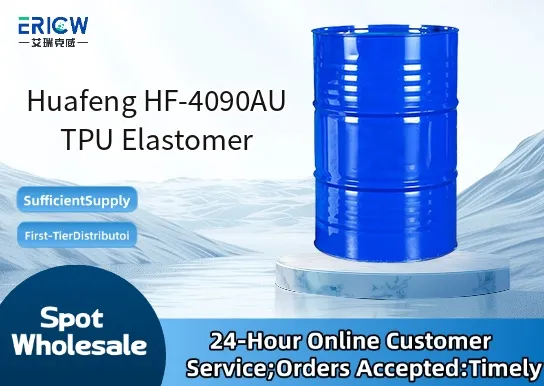
Excellent abrasion resistance for extended service life in demanding mechanical environments.
Outstanding oil and grease resistance, maintaining performance in contact with hydrocarbon-based fluids.
High tensile strength and elongation at break, enabling reliable dynamic deformation without failure.
Good low-temperature flexibility down to –30 °C, supporting consistent performance in cold-condition applications.
Excellent processability via extrusion, injection molding, and calendering—compatible with standard thermoplastic equipment.
Industrial hoses and tubing for hydraulic and pneumatic systems.
Protective sheathing for cables and wires in automotive and robotics sectors.
Roller covers and conveyor components requiring high wear resistance.
Seals, gaskets, and dynamic sealing elements in fluid handling equipment.
Footwear midsoles and performance outsoles for sports and work footwear.
| Chemical Type | Aliphatic polyester-based thermoplastic polyurethane |
| Product Form | Natural granules (free-flowing, cylindrical pellets) |
| Appearance | Translucent off-white to light amber granules |
| Primary Applications | Extruded profiles, molded seals, flexible tubing, industrial rollers |
| Key Features | Abrasion resistance, oil resistance, low-temperature flexibility, melt-processable |
| Benefits | Reduced maintenance frequency, extended component lifespan, design versatility |
| Melt Flow Index (190 °C / 2.16 kg) | 12–16 g/10 min |
| Density (ASTM D792) | 1.18–1.20 g/cm³ |
Q1: What are the key processing advantages of HF-4090AU compared to conventional TPU grades?
A: HF-4090AU offers enhanced melt flow stability and reduced viscosity sensitivity during extrusion and injection molding, enabling smoother processing at lower shear rates and improved surface finish in thin-walled or complex geometries.
Q2: Is HF-4090AU suitable for applications requiring long-term hydrolytic stability?
A: Yes — as an aliphatic polyester-based TPU, HF-4090AU demonstrates significantly improved resistance to hydrolysis compared to aromatic TPUs, especially under warm, humid conditions, making it well-suited for outdoor or high-moisture service environments.
Q3: Can HF-4090AU be blended with other thermoplastics or elastomers?
A: HF-4090AU shows good compatibility with several engineering thermoplastics such as PC, ABS, and certain polyolefins when used with appropriate compatibilizers; however, blend formulation and phase morphology should be validated experimentally for each intended application.
Q4: Does HF-4090AU require drying before processing?
A: Yes — like most polyester-based TPUs, HF-4090AU is hygroscopic and must be thoroughly dried prior to melt processing; typical drying conditions involve 80–90 °C for 3–4 hours using a desiccant dryer to achieve moisture content below 0.05%.
Contact With Us:
E-mail: wangxingqiang@ericwchem.com
Have a Questions? Call Us:
Add:
Building A1, Jiete Industrial Park, Huangpu District, Guangzhou City, Guangdong Province, China