English
 Español
 tiếng việt
 русский
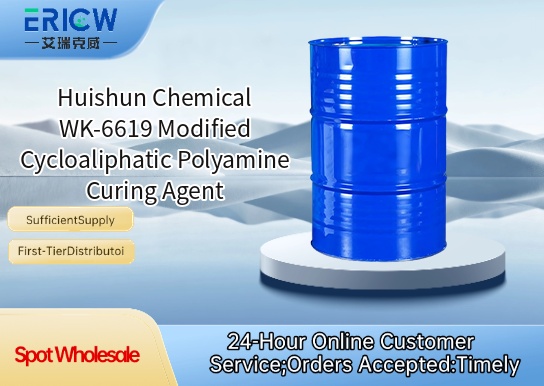
Enhanced thermal stability and glass transition temperature (Tg) in cured epoxy systems.
Low viscosity for improved processability and reduced mixing energy requirements.
Reduced volatility and amine odor compared to conventional aliphatic amines.
Excellent chemical resistance—particularly to alkalis, solvents, and mild acids.
Balanced reactivity enabling extended pot life with reliable room-temperature or elevated-temperature cure profiles.
High-performance industrial flooring and self-leveling epoxy coatings.
Electrical insulation systems for transformers, bushings, and encapsulation compounds.
Composite matrix resins in wind turbine blades and aerospace structural adhesives.
Marine and offshore protective coatings requiring corrosion resistance and durability.
UV-stable clear topcoats and decorative epoxy terrazzo systems.
| Chemical Type | Modified cycloaliphatic polyamine |
| Product Form | Liquid |
| Appearance | Clear to pale yellow, homogeneous liquid |
| Primary Applications | Epoxy resin curing agent for high-performance coatings, composites, and electrical encapsulation |
| Key Features | Low volatility, low exotherm, good compatibility with standard DGEBA and novolac epoxies |
| Benefits | Improved operator safety, reduced blistering risk, enhanced cured film hardness and flexibility balance |
| Storage Stability | At least 12 months in unopened original container at 5–30°C |
| Recommended Mix Ratio (by weight) | 100 parts epoxy resin : 35–45 parts WK-6619 (varies by epoxy type and performance target) |
Contact With Us:
E-mail: wangxingqiang@ericwchem.com
Have a Questions? Call Us:
Add:
Building A1, Jiete Industrial Park, Huangpu District, Guangzhou City, Guangdong Province, China