English
 Español
 tiếng việt
 русский
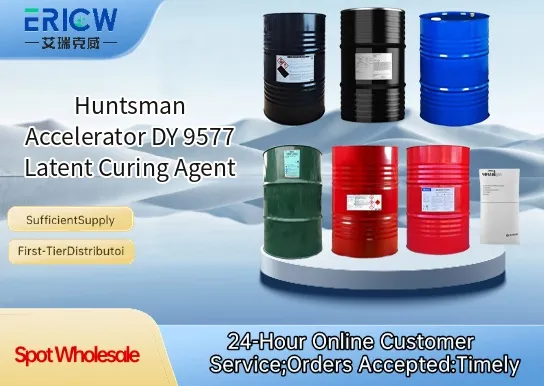
Latent at room temperature — enables extended pot life and ambient storage stability.
Activates rapidly upon heating — delivers efficient epoxy resin cure onset above 100 °C.
Halogen-free formulation — supports compliance with RoHS, REACH, and low-halogen electronics standards.
Low volatility and minimal odor — enhances workplace safety and reduces VOC emissions during processing.
Excellent compatibility with standard bisphenol-A and novolac epoxy resins — simplifies formulation integration.
High-reliability encapsulants for semiconductor packaging and power modules.
Prepregs and laminates in printed circuit board (PCB) manufacturing.
Structural adhesives for aerospace composite bonding.
Electrical insulation systems in motors, transformers, and high-voltage equipment.
Thermal interface materials requiring precise thermal-triggered crosslinking.
| Chemical Type | Imidazole derivative |
| Product Form | Off-white to light tan crystalline powder |
| Appearance | Free-flowing crystalline solid |
| Primary Applications | Epoxy resin curing in electronics and composites |
| Key Features | Latent, thermally activated, halogen-free |
| Onset Cure Temperature | ≥ 100 °C (DSC, 10 °C/min) |
| Storage Stability | Stable ≥ 12 months at 25 °C in sealed container |
| Recommended Loading Range | 0.5–2.0 phr (parts per hundred resin) |
Q1: What is the primary function of DY 9577 in epoxy resin systems?
A: DY 9577 is a latent amine-based accelerator designed to enhance the reactivity of epoxy–phenolic or epoxy–anhydride curing systems, enabling controlled latency at room temperature and rapid, efficient cure initiation upon thermal activation.
Q2: How does DY 9577 improve processing safety and shelf life?
A: Its latent nature provides excellent storage stability in one-component formulations—minimizing premature reaction during mixing, handling, or ambient storage—while maintaining consistent performance after thermal triggering during final cure.
Q3: With which types of epoxy resins and co-curing agents is DY 9577 typically compatible?
A: DY 9577 demonstrates broad compatibility with standard bisphenol-A and bisphenol-F epoxies, and is commonly used alongside phenolic novolacs, dicyandiamide (DICY), and aromatic anhydrides in high-performance composites, encapsulants, and powder coatings.
Q4: What is the typical dosage range for DY 9577 in formulated systems?
A: Dosage depends on formulation requirements and desired latency/cure profile, but it is generally used at low concentrations—typically ranging from 0.1% to 2% by weight relative to the epoxy resin—and should be optimized through application-specific testing.
Contact With Us:
E-mail: wangxingqiang@ericwchem.com
Have a Questions? Call Us:
Add:
Building A1, Jiete Industrial Park, Huangpu District, Guangzhou City, Guangdong Province, China