English
 Español
 tiếng việt
 русский
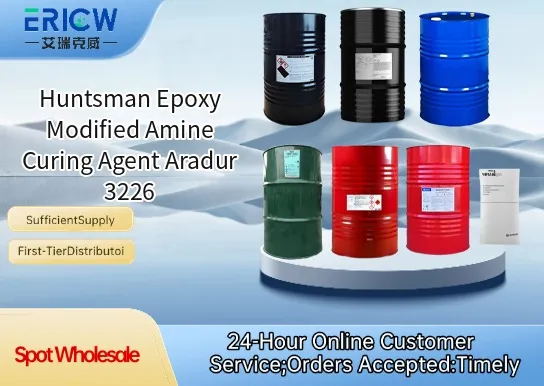
Low-viscosity liquid enabling easy handling and efficient mixing with epoxy resins.
Extended pot life at ambient temperatures, supporting longer working windows for large-scale applications.
Excellent adhesion to steel, concrete, and composite substrates without mandatory surface priming.
Good chemical resistance, particularly to alkalis, solvents, and mild acids in cured systems.
Reduced exotherm during cure, minimizing thermal stress and improving dimensional stability of thick-section castings.
Heavy-duty industrial flooring and protective coatings for chemical plants and warehouses.
Structural adhesive formulations for bonding metal and composite components in transportation equipment.
Casting and encapsulation of electrical and electronic components requiring high dielectric strength.
Repair mortars and grouts for infrastructure rehabilitation including bridges and marine structures.
| Chemical Type | Epoxy-modified aliphatic amine |
| Product Form | Clear to pale yellow liquid |
| Appearance | Homogeneous, free from sediment or haze |
| Density (25°C) | Approx. 0.94–0.97 g/cm³ |
| Viscosity (25°C) | Approx. 200–400 mPa·s |
| Amine Hydrogen Equivalent Weight (AHEW) | Approx. 110–125 g/eq |
| Reactivity Profile | Medium-reactive; gel time ~60–90 min at 25°C with standard DGEBA resin |
| Primary Applications | High-performance coatings, adhesives, and castings |
Q1: What is the primary function of Aradur 3226 in epoxy systems?
A: Aradur 3226 is an epoxy-modified amine curing agent designed to provide enhanced compatibility, reduced volatility, and improved handling safety compared to conventional aliphatic amines—while delivering good mechanical properties and chemical resistance in cured epoxy formulations.
Q2: Is Aradur 3226 suitable for ambient-cure applications?
A: Yes, Aradur 3226 is formulated for ambient-temperature curing of epoxy resins, offering practical pot life and reasonable gel times under typical workshop conditions—making it well-suited for coatings, adhesives, and repair mortars where heat curing is not feasible.
Q3: How does Aradur 3226 compare to standard aliphatic amines in terms of odor and skin irritation?
A: Due to its epoxy modification, Aradur 3226 exhibits significantly lower volatility and reduced amine odor, along with milder skin sensitization potential compared to unmodified aliphatic amines—supporting safer handling in industrial environments.
Q4: Can Aradur 3226 be used with standard DGEBA-type epoxy resins?
A: Yes, Aradur 3226 is broadly compatible with conventional liquid and solid bisphenol-A (DGEBA) epoxy resins, as well as many modified epoxy systems—including those used in high-performance coatings and composite matrices.
Q5: What are typical formulation considerations when using Aradur 3226?
A: Formulators should consider stoichiometric balance, mixing efficiency, and ambient humidity—especially in thin-film applications. The dosage typically ranges from 0.1% to 2% by weight relative to resin, depending on desired cure speed, final properties, and system complexity.
Contact With Us:
E-mail: wangxingqiang@ericwchem.com
Have a Questions? Call Us:
Add:
Building A1, Jiete Industrial Park, Huangpu District, Guangzhou City, Guangdong Province, China