English
 Español
 tiếng việt
 русский
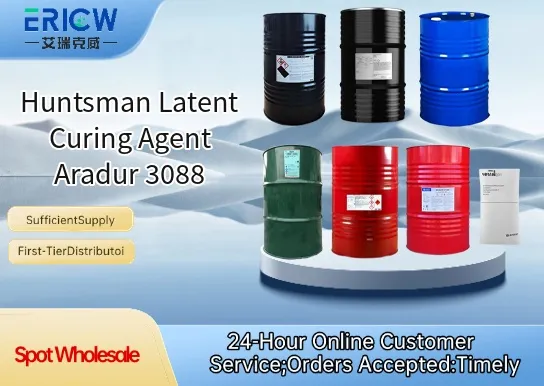
Latent at room temperature, enabling extended pot life and ambient storage stability.
Activates rapidly upon thermal triggering (typically >100 °C), delivering efficient epoxy resin cure kinetics.
Produces low-color, high-gloss cured films with excellent chemical resistance and mechanical performance.
Compatible with standard bisphenol-A and bisphenol-F epoxy resins without requiring co-catalysts.
Low volatility and low odor profile, supporting safer handling in industrial environments.
Electrical encapsulation compounds for power modules and LED packaging.
High-performance structural adhesives in aerospace and automotive bonding assemblies.
Powder coatings requiring smooth finish, rapid melt-flow, and controlled crosslink density.
Prepregs and composite matrices where shelf-life stability and precise thermal activation are critical.
Electronics-grade underfills and glob-tops demanding low ionic contamination and high Tg.
| Chemical Type | Dicyandiamide-based latent curing agent |
| Product Form | White to off-white free-flowing crystalline powder |
| Appearance | Crystalline solid, homogeneous granular powder |
| Primary Applications | Epoxy resin systems for encapsulation, adhesives, and powder coatings |
| Key Features | Room-temperature latency, thermal activation onset ~100–110 °C |
| Benefits | Extended processing window, low moisture sensitivity, consistent cure reproducibility |
| Storage Stability | Stable ≥12 months at 25 °C in sealed original packaging |
| Recommended Loading Range | 4–8 phr (parts per hundred resin) depending on epoxy type and performance requirements |
Q1: What is the primary function of Aradur 3088 in epoxy resin systems?
A: Aradur 3088 is a latent curing agent designed to provide extended pot life at ambient temperatures while enabling rapid, efficient cure upon thermal activation—typically above 120 °C. It facilitates high-gloss, low-shrinkage thermoset networks with excellent chemical and thermal resistance.
Q2: How does Aradur 3088 compare to conventional amine-based hardeners in terms of handling and safety?
A: Unlike many reactive amines, Aradur 3088 exhibits significantly lower volatility and reduced skin sensitization potential due to its chemically stabilized, latent structure. It offers improved handling stability and longer shelf life under standard storage conditions, without requiring special ventilation or stringent personal protective equipment during routine handling.
Q3: Which epoxy resins is Aradur 3088 most commonly used with?
A: Aradur 3088 demonstrates broad compatibility with standard liquid and solid bisphenol-A and bisphenol-F epoxy resins, as well as novolac epoxies. It is especially suited for high-performance powder coatings, filament-wound composites, and pre-impregnated (prepreg) systems where controlled reactivity and low-temperature storage stability are critical.
Q4: What are typical processing conditions required to achieve full cure with Aradur 3088?
A: Full crosslinking generally requires thermal activation—commonly a dwell time of 30–90 minutes within the range of 130–170 °C, depending on part geometry, thermal mass, and desired performance profile. Cure onset is typically observed above 120 °C, with reaction rate increasing markedly above 140 °C.
Q5: Can Aradur 3088 be blended with other curing agents or accelerators?
A: Yes—Aradur 3088 can be co-formulated with select tertiary amines or imidazoles to fine-tune latency and cure profile. However, compatibility and reactivity must be validated experimentally for each specific system, as synergistic or antagonistic effects may occur depending on resin type, concentration, and thermal schedule.
Contact With Us:
E-mail: wangxingqiang@ericwchem.com
Have a Questions? Call Us:
Add:
Building A1, Jiete Industrial Park, Huangpu District, Guangzhou City, Guangdong Province, China