English
 Español
 tiếng việt
 русский
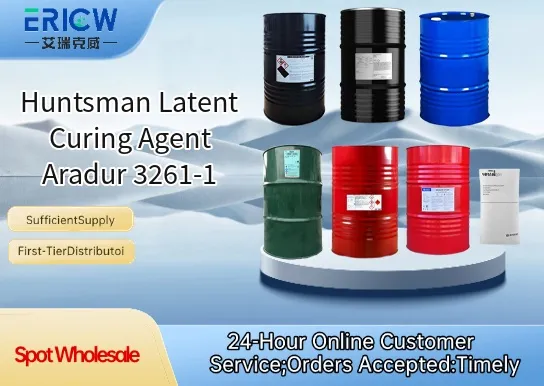
Latent reactivity enables extended pot life at ambient temperature, supporting complex processing and large-part fabrication.
Activates reliably upon thermal cure (typically 120–150 °C), delivering consistent epoxy network formation without premature gelation.
Low volatility and minimal odor enhance workplace safety and compliance with industrial hygiene standards.
Excellent compatibility with standard bisphenol-A and bisphenol-F epoxy resins ensures broad formulation flexibility.
Delivers high glass transition temperature (Tg) and superior mechanical performance in cured composites.
Aerospace composite tooling and structural components requiring dimensional stability and thermal resistance.
Wind turbine blade bonding and infusion systems where controlled reactivity and low exotherm are critical.
Electrical insulation systems for high-voltage equipment and encapsulation of power electronics.
Automotive under-hood components demanding long-term durability at elevated service temperatures.
High-performance adhesives and prepreg systems for industrial and defense applications.
| Chemical Type | Dicyandiamide-based latent hardener |
| Product Form | White to off-white crystalline powder |
| Appearance | Free-flowing crystalline solid |
| Primary Applications | Epoxy resin curing for composites, adhesives, and coatings |
| Key Features | Latent, thermally activated, low volatility, high Tg capability |
| Benefits | Extended shelf life, improved processing window, reduced VOC emissions |
| Recommended Cure Schedule | 120 °C for 2 hours, or 150 °C for 1 hour |
| Storage Conditions | Store in original sealed container below 25 °C, protect from moisture |
Q1: What is the primary function of Aradur 3261-1 in epoxy resin systems?
A: Aradur 3261-1 is a latent curing agent designed to provide extended pot life at ambient temperatures while enabling rapid, efficient cure upon thermal activation—making it suitable for one-component (1K) epoxy formulations requiring storage stability and controlled processing.
Q2: At what temperature range does Aradur 3261-1 typically initiate and complete curing?
A: Cure initiation generally begins above 120 °C, with full crosslinking achieved within practical industrial bake cycles (e.g., 130–160 °C for 10–30 minutes), depending on substrate, film thickness, and thermal mass.
Q3: How does Aradur 3261-1 compare to traditional dicyandiamide (DICY) in terms of handling and performance?
A: Unlike DICY, Aradur 3261-1 offers improved solubility in common epoxy resins, reduced dust generation during handling, and more consistent dispersion—leading to enhanced batch-to-batch reproducibility and reduced risk of surface defects in cured films.
Q4: Is Aradur 3261-1 compatible with standard bisphenol-A and bisphenol-F epoxy resins?
A: Yes, Aradur 3261-1 demonstrates broad compatibility with conventional liquid and solid bisphenol-based epoxy resins, as well as many novolac and multifunctional epoxies—though optimal performance should be confirmed via formulation-specific testing.
Q5: What is the typical dosage range for Aradur 3261-1 in epoxy formulations?
A: Dosage is formulation-dependent but generally ranges from 0.1% to 2% by weight relative to total resin solids, with lower levels often sufficient for high-reactivity systems and higher levels used where extended latency or enhanced thermal stability is required.
Contact With Us:
E-mail: wangxingqiang@ericwchem.com
Have a Questions? Call Us:
Add:
Building A1, Jiete Industrial Park, Huangpu District, Guangzhou City, Guangdong Province, China