English
 Español
 tiếng việt
 русский
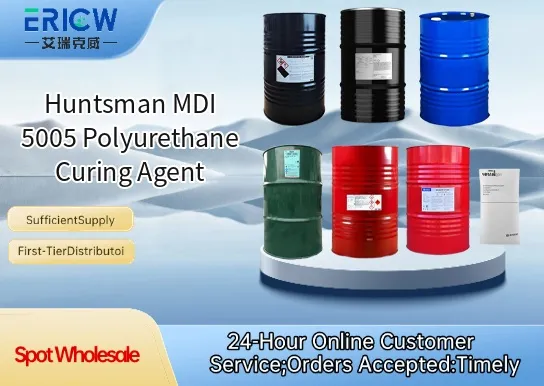
High-reactivity aromatic diisocyanate based on methylene diphenyl diisocyanate (MDI) for fast-cure polyurethane systems.
Low volatility and reduced monomeric MDI content compared to standard 4,4′-MDI, enhancing workplace safety and handling stability.
Excellent compatibility with polyether and polyester polyols, enabling broad formulation flexibility across rigid and semi-rigid foams.
Consistent reactivity profile ensures reproducible processing behavior in continuous slabstock and molded foam production.
Optimized for use in moisture-cured and prepolymer-based systems requiring balanced pot life and demold time.
Rigid polyurethane insulation foams for refrigeration and building envelope applications.
Semi-rigid automotive seating and headrest foams requiring high resilience and dimensional stability.
Industrial elastomer castings including rollers, wheels, and mining screens.
Adhesives and sealants where rapid green strength development is critical.
Coatings and binders for composite wood products and foundry core applications.
| Chemical Type | Aromatic diisocyanate (modified MDI) |
| Product Form | Liquid |
| Appearance | Pale yellow to amber clear liquid |
| Primary Applications | Rigid & semi-rigid PU foams, elastomers, adhesives, coatings |
| Key Features | Low monomer content, high reactivity, thermal stability |
| Benefits | Improved worker safety, consistent processing, enhanced foam cell structure |
| Storage Conditions | Store under dry nitrogen at 20–30°C; protect from moisture |
| Handling Precautions | Use in well-ventilated areas; wear appropriate PPE (gloves, goggles, respirator) |
Q1: What is the primary function of MDI 5005 in polyurethane systems?
A: MDI 5005 is a modified diphenylmethane diisocyanate (MDI)-based curing agent designed to react with polyol components to form thermoset polyurethane networks. It enables rapid gelation and development of high crosslink density, supporting demanding performance requirements in coatings, adhesives, and elastomers.
Q2: How does MDI 5005 differ from standard liquid MDI or polymeric MDI?
A: MDI 5005 is a tailored monomeric MDI variant with controlled reactivity and reduced volatility compared to unmodified MDI. It offers improved handling safety and better compatibility with sensitive polyols, while maintaining high functionality and cure speed—making it especially suitable for one-component moisture-cure formulations and reactive hot-melt applications.
Q3: Is MDI 5005 compatible with common polyol types used in industrial PU systems?
A: Yes, MDI 5005 demonstrates broad compatibility with polyester, polyether, polycarbonate, and acrylic polyols. Its formulation allows stable pre-polymer synthesis and good dispersion in solvent- and water-based systems, though optimal performance requires evaluation under specific process conditions such as mixing ratio, temperature, and catalyst selection.
Q4: What are key storage and handling considerations for MDI 5005?
A: MDI 5005 should be stored in tightly sealed containers under dry, inert conditions (e.g., nitrogen blanket) at temperatures between 20–30°C to prevent moisture ingress and premature dimerization. Exposure to ambient humidity must be minimized during handling, and appropriate personal protective equipment—including chemical-resistant gloves and eye protection—is recommended due to its isocyanate reactivity.
Contact With Us:
E-mail: wangxingqiang@ericwchem.com
Have a Questions? Call Us:
Add:
Building A1, Jiete Industrial Park, Huangpu District, Guangzhou City, Guangdong Province, China