English
 Español
 tiếng việt
 русский
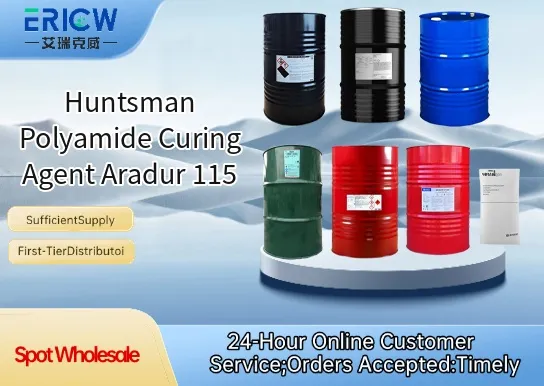
Flexible cure profile enabling excellent pot life and workability at ambient temperatures.
Good chemical resistance, particularly to water, alkalis, and mild solvents after full cure.
Provides tough, impact-resistant epoxy coatings with balanced mechanical properties.
Low viscosity facilitates easy handling, mixing, and application by brush, roller, or spray.
Complies with REACH and is registered under the EU ECHA inventory for industrial use.
Industrial maintenance coatings for steel structures and concrete surfaces.
Marine antifouling and protective primers for ballast tanks and hulls.
Flooring systems in warehouses, garages, and food processing facilities.
Adhesives and structural bonding formulations for metal-to-metal assemblies.
Electrical insulation coatings for transformers and busbars.
| Chemical Type | Polyamide adduct |
| Product Form | Liquid |
| Appearance | Amber to light brown viscous liquid |
| Primary Applications | Epoxy resin curing agent for coatings, adhesives, and composites |
| Key Features | Ambient-cure capability, low exotherm, good flexibility |
| Benefits | Extended working time, improved adhesion to damp substrates, reduced shrinkage |
| Storage Stability | 12 months in original sealed container at 15–25°C |
| Hazard Classification | Not classified as hazardous under GHS (EU CLP) |
Q1: What is the primary function of Aradur 115 in epoxy systems?
A: Aradur 115 is a polyamide-based curing agent designed to react with epoxy resins, enabling crosslinking at ambient or slightly elevated temperatures. It imparts flexibility, good adhesion, and chemical resistance to the cured network, making it suitable for coatings, adhesives, and repair mortars.
Q2: Is Aradur 115 compatible with standard bisphenol-A and bisphenol-F epoxy resins?
A: Yes, Aradur 115 is broadly compatible with common liquid and solid bisphenol-A and bisphenol-F epoxy resins. Compatibility and cure performance should be verified experimentally within the specific formulation, as resin molecular weight, functionality, and additives can influence reactivity and final properties.
Q3: How does humidity affect the curing process when using Aradur 115?
A: As a polyamide curing agent, Aradur 115 exhibits relatively low sensitivity to ambient moisture compared to amine-based alternatives. However, prolonged exposure to high humidity during cure may lead to surface tackiness or reduced gloss in thin-film applications—proper ventilation and controlled application conditions are recommended.
Q4: Can Aradur 115 be used in food-contact or potable water applications?
A: Aradur 115 is not pre-qualified for direct food-contact or potable water applications under major regulatory frameworks. Formulators must conduct full system-level testing and obtain appropriate regulatory approvals based on the final cured product’s intended use and exposure conditions.
Contact With Us:
E-mail: wangxingqiang@ericwchem.com
Have a Questions? Call Us:
Add:
Building A1, Jiete Industrial Park, Huangpu District, Guangzhou City, Guangdong Province, China