English
 Español
 tiếng việt
 русский
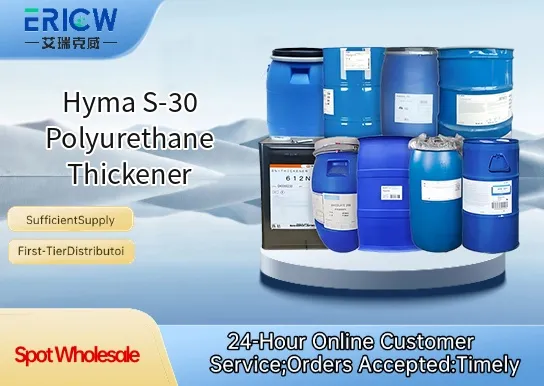
Non-ionic, hydrophobically modified polyurethane (HMPEU) rheology modifier
Delivers excellent shear-thinning behavior and outstanding sag resistance
Compatible with both water-based and low-VOC architectural and industrial coatings
Provides stable viscosity retention across wide pH range (6–10)
Enables efficient thickening without compromising gloss or film formation
Waterborne architectural interior and exterior paints
Industrial maintenance coatings for metal and concrete substrates
Water-based wood stains and clear finishes
Low-VOC and eco-label-compliant decorative coatings
Textured wall coatings and acrylic-based plasters
| Chemical Type | Hydrophobically Modified Polyurethane (HMPEU) |
| Product Form | Opaque viscous liquid |
| Appearance | Off-white to light amber, homogeneous liquid |
| pH (1% aqueous solution) | 7.0–8.5 |
| Active Content | 30.0 ± 1.0 wt% |
| Solvent Base | Propylene glycol monomethyl ether (PM) and water |
| Primary Applications | Rheology control in water-based coatings and finishes |
| Key Features | High efficiency, low dosage, excellent compatibility, non-ionic stability |
Q1: What type of rheology does Hyma S-30 provide in waterborne systems?
A: Hyma S-30 is a non-ionic, hydrophobically modified polyurethane (HEUR) thickener that delivers strong pseudoplastic flow behavior—providing excellent viscosity build at low shear while maintaining good flow and leveling at high shear. It imparts robust sag resistance and brush/roller drag reduction in architectural and industrial coatings.
Q2: Is Hyma S-30 compatible with other thickeners or rheology modifiers?
A: Yes—Hyma S-30 is commonly used in combination with associative cellulose ethers (e.g., HMHEC) or acrylic thickeners to fine-tune rheological profiles. However, compatibility should be verified in the final formulation, as interactions with surfactants, co-solvents, or ionic additives may affect performance.
Q3: How is Hyma S-30 typically incorporated into formulations?
A: It is generally added during the let-down stage, after pigments and primary binders are dispersed. Pre-dilution with water or a water-miscible solvent (e.g., propylene glycol) is recommended for uniform incorporation. Avoid direct addition to highly alkaline or high-surfactant phases without prior testing.
Q4: Does Hyma S-30 require pH adjustment for optimal performance?
A: Unlike some ionic thickeners, Hyma S-30 is pH-independent and performs consistently across a broad pH range (typically pH 4–10). No buffering or pH stabilization is needed solely for thickener activation.
Q5: What storage conditions are recommended for Hyma S-30?
A: Store in original sealed containers at temperatures between 5 °C and 30 °C, away from freezing and prolonged exposure to direct sunlight. Prolonged storage at elevated temperatures may accelerate viscosity drift or phase separation.
Contact With Us:
E-mail: wangxingqiang@ericwchem.com
Have a Questions? Call Us:
Add:
Building A1, Jiete Industrial Park, Huangpu District, Guangzhou City, Guangdong Province, China