English
 Español
 tiếng việt
 русский
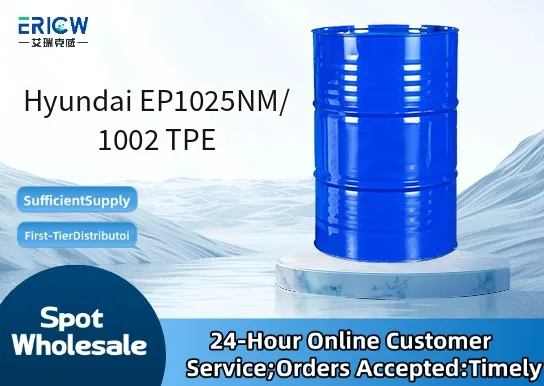
Excellent melt processability for high-speed extrusion and injection molding.
Superior soft-touch feel with balanced hardness (Shore A 25) and elasticity.
Good resistance to UV exposure and thermal aging, enhancing outdoor durability.
Low extractables profile, supporting compliance with RoHS and REACH requirements.
Compatible with polypropylene (PP) and polyethylene (PE) substrates for co-extrusion and overmolding.
Automotive interior trim components including door panels and center console overlays.
Consumer electronics housings and protective grips for power tools and handheld devices.
Household appliance seals, gaskets, and soft-touch control buttons.
Medical device non-critical components requiring skin-contact compatibility and easy sterilization.
Packaging closures and flexible caps for personal care and food-grade containers.
| Chemical Type | Thermoplastic Elastomer (TPE), Styrenic Block Copolymer (SBC)-based |
| Product Form | Pellets |
| Appearance | Off-white, free-flowing granules |
| Hardness (Shore A) | 25 ± 2 |
| Melt Flow Rate (230°C/2.16 kg) | 18–22 g/10 min |
| Density (ASTM D792) | 0.92–0.94 g/cm³ |
| Service Temperature Range | −40°C to +70°C (short-term up to 80°C) |
| Key Features | Soft-touch surface, PP/PE adhesion, low volatility, halogen-free |
Q1: What is the primary function of Hyundai EP1025NM/1002 TPE in polymer formulations?
A: Hyundai EP1025NM/1002 TPE is a thermoplastic elastomer designed primarily as a compatibilizer and impact modifier for polyolefin-based systems, especially in PP/EPDM or PP/POE blends. It enhances melt flow, improves interfacial adhesion between immiscible phases, and contributes to balanced toughness and stiffness.
Q2: Is this grade suitable for applications requiring good processability on standard injection molding equipment?
A: Yes — EP1025NM/1002 exhibits excellent thermal stability and low melt viscosity, making it well-suited for conventional injection molding and extrusion processes without requiring specialized hardware or significant process adjustments.
Q3: Can Hyundai EP1025NM/1002 TPE be used in automotive interior components?
A: Yes — it is commonly employed in automotive interior parts such as trim caps, instrument panel substrates, and door modules where low-temperature impact resistance, surface finish consistency, and compatibility with painted or metallized finishes are important.
Q4: How does EP1025NM/1002 perform under elevated temperature conditions during processing or end-use?
A: This grade maintains structural integrity and mechanical performance at continuous service temperatures up to approximately 100 °C and demonstrates good resistance to thermal degradation during typical melt processing cycles.
Q5: What types of base resins does EP1025NM/1002 TPE typically blend with?
A: It shows strong compatibility with polypropylene (PP), polyethylene (PE), and their copolymers, and is frequently used to modify PP homopolymers and impact copolymers in both rigid and semi-flexible applications.
Contact With Us:
E-mail: wangxingqiang@ericwchem.com
Have a Questions? Call Us:
Add:
Building A1, Jiete Industrial Park, Huangpu District, Guangzhou City, Guangdong Province, China