English
 Español
 tiếng việt
 русский
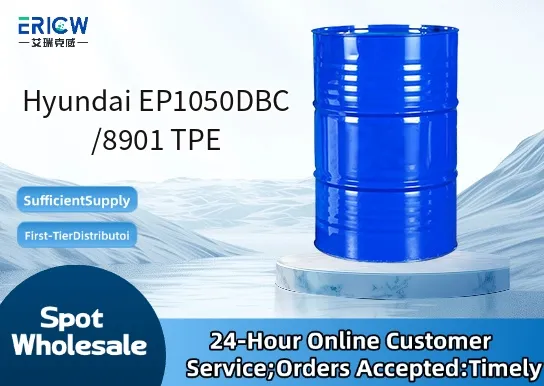
Thermoplastic elastomer (TPE) based on SEBS chemistry for excellent elasticity and resilience.
Halogen-free formulation meeting stringent RoHS and REACH compliance requirements.
Outstanding processability via injection molding and extrusion with low mold fouling tendency.
Good UV resistance and long-term thermal stability up to 70°C continuous service temperature.
Soft-touch surface finish with adjustable hardness (Shore A 55–65 range).
Automotive interior trim components including door panels, armrests, and dashboard overlays.
Consumer electronics protective casings and soft-grip grips for power tools and appliances.
Medical device housings requiring biocompatibility support and tactile feedback.
Sealing profiles and gasketing solutions for industrial enclosures and outdoor equipment.
Flexible tubing and overmolding substrates for PVC or PP base materials.
| Chemical Type | SEBS-based Thermoplastic Elastomer |
| Product Form | Pellets |
| Appearance | Off-white to light beige, free-flowing granules |
| Hardness (Shore A) | 60 ± 3 |
| Melt Flow Index (230°C/2.16 kg) | 12–16 g/10 min |
| Density | 0.90–0.92 g/cm³ |
| Key Features | Elastic recovery, low compression set, recyclable |
| Compliance | RoHS 2015/863/EU, REACH SVHC-free |
Q1: What is the primary function of Hyundai EP1050DBC/8901 TPE in polymer formulations?
A: Hyundai EP1050DBC/8901 TPE is a thermoplastic elastomer designed to enhance flexibility, impact resistance, and soft-touch characteristics in rigid thermoplastic matrices—particularly polypropylene (PP) and polyethylene (PE) compounds. It functions as a compatibilized impact modifier and soft-phase dispersant.
Q2: Is this grade suitable for applications requiring regulatory compliance for food contact or skin contact?
A: Hyundai EP1050DBC/8901 TPE is formulated without intentionally added heavy metals, phthalates, or halogenated flame retardants. While it is commonly used in consumer-facing applications such as grips, seals, and overmolded components, formal regulatory clearance (e.g., FDA, EU food contact or REACH SVHC status) must be verified case-by-case with the latest batch-specific documentation from Hyundai Chemical.
Q3: How should EP1050DBC/8901 be processed during compounding or injection molding?
A: This TPE processes well using standard twin-screw extrusion and injection molding equipment. Recommended melt temperatures range between 170–210 °C, depending on base resin and shear history. Drying is generally not required under ambient conditions, though extended storage in humid environments may warrant mild pre-drying (≤80 °C for 2–4 hours) to ensure optimal surface quality.
Q4: Can EP1050DBC/8901 be blended with other thermoplastic elastomers or engineering resins?
A: Yes—EP1050DBC/8901 exhibits good compatibility with PP, PE, and certain SEBS-based TPEs. Blending with polar resins (e.g., PA, PET, or PC) typically requires a compatibilizer or functionalized coupling agent to achieve stable morphology and mechanical performance.
Contact With Us:
E-mail: wangxingqiang@ericwchem.com
Have a Questions? Call Us:
Add:
Building A1, Jiete Industrial Park, Huangpu District, Guangzhou City, Guangdong Province, China