English
 Español
 tiếng việt
 русский
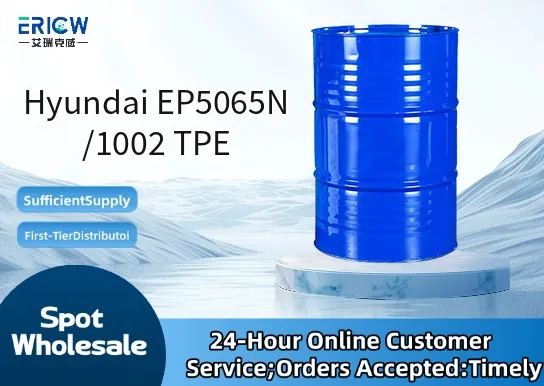
Excellent elasticity and recovery performance at room and elevated temperatures.
Good processability on standard thermoplastic equipment including injection molding and extrusion lines.
Enhanced resistance to UV exposure and thermal aging compared to conventional SEBS-based TPEs.
Low extractables and compliant with FDA 21 CFR §177.2600 for indirect food contact applications.
Soft-touch surface finish with consistent Shore A hardness and low compression set.
Automotive interior trim components including door panels, armrests, and instrument cluster bezels.
Consumer electronics housings and protective overmolding for power tools and small appliances.
Medical device grips and non-invasive wearable component overmolds.
Household appliance seals, gaskets, and ergonomic handles requiring tactile comfort and durability.
Industrial packaging components where flexibility, chemical resistance, and recyclability are critical.
| Chemical Type | Styrenic Thermoplastic Elastomer (SEBS-based) |
| Product Form | Pellets |
| Appearance | Off-white, translucent granules |
| Shore A Hardness | 65 ± 3 |
| Melt Flow Rate (200°C/5 kg) | 12–16 g/10 min |
| Density | 0.90–0.92 g/cm³ |
| Continuous Use Temperature Range | −40°C to +80°C |
| Primary Applications | Overmolding, soft-touch components, flexible seals |
Q1: What is the primary application domain for Hyundai EP5065N/1002 TPE?
A: Hyundai EP5065N/1002 TPE is primarily engineered for soft-touch overmolding and functional elastomeric components in automotive interior systems, including control knobs, gear shift boots, and trim bezels requiring consistent tactile response and long-term dimensional stability.
Q2: How does EP5065N/1002 perform in terms of adhesion to common thermoplastics?
A: This grade exhibits strong inherent adhesion to polypropylene (PP) and polyethylene (PE), especially when processed under optimized injection molding conditions. Bond strength to ABS or PC may require surface activation or a compatible tie-layer, depending on part geometry and service requirements.
Q3: Is EP5065N/1002 suitable for applications requiring low-temperature flexibility?
A: Yes — as a thermoplastic elastomer based on a SEBS matrix, it maintains good flexibility and impact resistance down to approximately −40 °C, making it appropriate for automotive interior parts exposed to cold-climate operating environments.
Q4: What processing methods are recommended for this material?
A: Hyundai EP5065N/1002 TPE is designed for conventional injection molding and two-shot (multi-material) molding processes. It requires standard drying prior to processing and performs best with mold temperatures between 30–50 °C and melt temperatures in the range of 180–220 °C.
Contact With Us:
E-mail: wangxingqiang@ericwchem.com
Have a Questions? Call Us:
Add:
Building A1, Jiete Industrial Park, Huangpu District, Guangzhou City, Guangdong Province, China