English
 Español
 tiếng việt
 русский
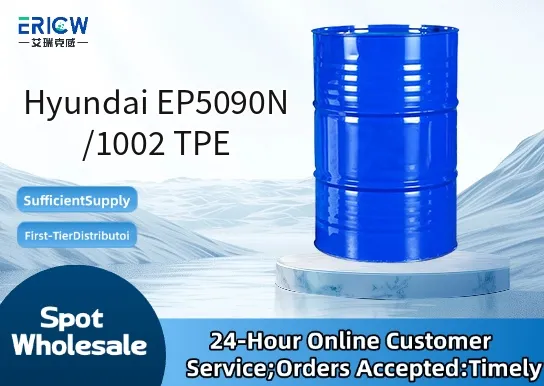
High elasticity and excellent rebound resilience for dynamic sealing and flexible component performance.
Good processability via injection molding and extrusion, enabling efficient high-volume production.
Enhanced UV and thermal stability suitable for outdoor and elevated-temperature applications.
Low compression set retention ensures long-term sealing integrity under sustained mechanical stress.
Halogen-free formulation compliant with RoHS and REACH regulatory requirements.
Automotive interior trim components including door panels, armrests, and console covers.
Consumer electronics housings and soft-touch overmolded grips for power tools and appliances.
Sealing gaskets and weatherstrips for HVAC systems and building envelope assemblies.
Medical device casings requiring tactile comfort, chemical resistance, and biocompatibility support.
Industrial fluid-handling connectors and vibration-damping mounts.
| Chemical Type | Thermoplastic Elastomer (TPE), Styrenic Block Copolymer (SEBS)-based |
| Product Form | Pellets |
| Appearance | Off-white, translucent granules |
| Primary Applications | Overmolding, soft-touch surfaces, dynamic seals, flexible profiles |
| Key Features | Elastic recovery, low compression set, easy processing, halogen-free |
| Benefits | Reduced part weight vs. rubber, recyclable thermoplastic processing, no vulcanization required |
| Processing Method | Injection molding, extrusion, two-shot molding |
| Storage Conditions | Store in dry, cool environment; avoid direct sunlight and moisture exposure |
Q1: What is the primary function of Hyundai EP5090N/1002 TPE in polymer formulations?
A: Hyundai EP5090N/1002 TPE is a thermoplastic elastomer designed primarily as a compatibilizer and impact modifier for polyolefin-based systems, especially in PP/EPDM blends. It enhances melt flow, improves interfacial adhesion between immiscible phases, and contributes to balanced stiffness-toughness performance.
Q2: Is EP5090N/1002 suitable for applications requiring regulatory compliance for food contact or medical use?
A: While EP5090N/1002 is formulated with non-toxic, FDA-acceptable raw materials, it is not pre-certified for direct food contact or medical device applications. End-use compliance must be verified by the compounder or end user through full formulation testing and applicable regulatory review.
Q3: How does EP5090N/1002 perform under thermal processing conditions typical for injection molding and extrusion?
A: EP5090N/1002 demonstrates good thermal stability during standard polyolefin processing, with recommended melt temperatures ranging from 180 °C to 230 °C. It shows minimal degradation or volatilization within this window and maintains consistent rheological behavior across multiple processing cycles.
Q4: Can EP5090N/1002 be used in combination with other functional additives such as flame retardants or UV stabilizers?
A: Yes — EP5090N/1002 is generally compatible with common additive packages including halogen-free flame retardants, hindered amine light stabilizers (HALS), and phosphite antioxidants. However, additive interactions should be evaluated on a case-by-case basis, particularly when high loadings or reactive chemistries are involved.
Contact With Us:
E-mail: wangxingqiang@ericwchem.com
Have a Questions? Call Us:
Add:
Building A1, Jiete Industrial Park, Huangpu District, Guangzhou City, Guangdong Province, China