English
 Español
 tiếng việt
 русский
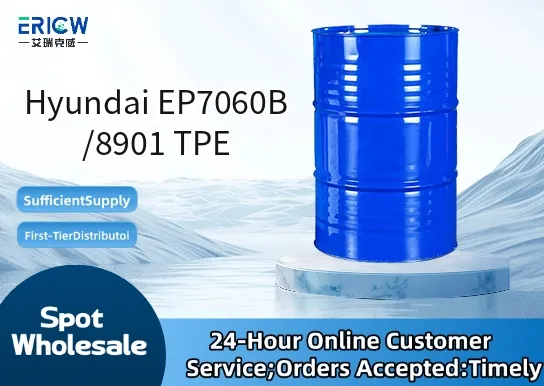
Thermoplastic elastomer (TPE) based on SEBS chemistry for excellent elasticity and resilience.
Outstanding processability via injection molding and extrusion with low energy consumption.
Good resistance to UV, ozone, and aging—suitable for outdoor and long-term service applications.
Soft-touch surface finish with high gloss and consistent colorability using standard masterbatches.
Halogen-free formulation compliant with RoHS and REACH directives for sustainable manufacturing.
Automotive interior trim components including door panels, armrests, and instrument bezels.
Consumer electronics housings and protective overmolded grips for power tools and appliances.
Medical device grips and non-invasive wearable component housings (ISO 10993-5 tested).
Household appliance seals, gaskets, and soft-touch control knobs requiring tactile feedback.
Industrial handles and ergonomic tool overmolds requiring slip resistance and fatigue durability.
| Chemical Type | SEBS-based Thermoplastic Elastomer |
| Product Form | Pellets |
| Appearance | Natural translucent granules |
| Hardness (Shore A) | 60 ± 3 |
| Melt Flow Rate (230°C/2.16 kg) | 12–18 g/10 min |
| Density | 0.90–0.92 g/cm³ |
| Key Features | Elastic recovery >95%, low compression set, excellent adhesion to PP/PS substrates |
| Compliance | RoHS 2015/863/EU, REACH SVHC-free, FDA-compliant for indirect food contact (21 CFR 177.2600) |
Q1: What is the primary function of Hyundai EP7060B/8901 TPE in polymer formulations?
A: EP7060B/8901 TPE is a thermoplastic elastomer modifier designed to enhance flexibility, impact resistance, and melt processability in rigid thermoplastic matrices—particularly polypropylene (PP) and polyethylene (PE) compounds. It functions as a compatibilized elastomeric phase to improve toughness without significantly compromising stiffness or thermal stability.
Q2: Is EP7060B/8901 TPE suitable for applications requiring regulatory compliance for food contact or medical use?
A: EP7060B/8901 TPE is formulated without intentionally added heavy metals, phthalates, or halogenated flame retardants. While it may be incorporated into systems that meet certain regional food-contact or medical-grade requirements, final compliance depends on the full formulation, processing conditions, and end-use validation. Users must conduct their own regulatory assessment and testing.
Q3: How should EP7060B/8901 TPE be processed during compounding or injection molding?
A: This grade exhibits good thermal stability and melt flow behavior. It can be compounded using standard twin-screw extruders and processed via injection molding or extrusion at typical TPE temperature ranges. Drying is generally not required prior to processing, though storage in controlled humidity conditions is recommended to maintain optimal handling characteristics.
Q4: Can EP7060B/8901 TPE be blended with other polymers beyond PP and PE?
A: Yes—it shows reasonable compatibility with certain engineering thermoplastics such as ABS and PS when used with appropriate compatibilizers. However, direct blending with highly polar resins (e.g., PA, PET) or thermosets is not recommended without thorough evaluation of interfacial adhesion and phase morphology.
Contact With Us:
E-mail: wangxingqiang@ericwchem.com
Have a Questions? Call Us:
Add:
Building A1, Jiete Industrial Park, Huangpu District, Guangzhou City, Guangdong Province, China