English
 Español
 tiếng việt
 русский
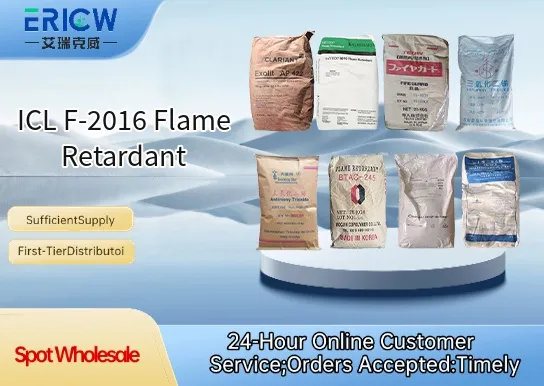
Halogen-free, environmentally sustainable alternative to traditional brominated flame retardants.
Excellent thermal stability suitable for processing temperatures up to 280 °C.
Low smoke density and reduced toxic gas emission during combustion (per ASTM E662 and ISO 5659-2).
Good compatibility with polyolefins, including PP and PE, without compromising mechanical properties.
UL 94 V-0 rated at 1.6 mm thickness when compounded at recommended loading levels.
Wire and cable insulation and jacketing materials.
Automotive interior components requiring low-smoke, halogen-free solutions.
Electrical enclosures and housings for consumer electronics.
Building and construction thermoplastic profiles (e.g., conduit, ducts).
Flexible and rigid polyolefin foams for transportation and infrastructure applications.
| Chemical Type | Organophosphorus-based flame retardant |
| Product Form | Free-flowing white granules |
| Appearance | Off-white to light beige granules |
| Density (g/cm³) | 1.35–1.45 (at 23 °C) |
| Melting Range (°C) | 220–240 |
| Moisture Content (% w/w) | ≤ 0.2 |
| pH (1% aqueous dispersion) | 6.5–7.5 |
| Primary Applications | Polypropylene (PP), polyethylene (PE), and thermoplastic elastomers (TPE) |
Q1: What types of polymers is ICL F-2016 compatible with?
A: ICL F-2016 is primarily designed for use in thermoplastic polyolefins such as polypropylene (PP) and high-density polyethylene (HDPE), where it provides effective flame retardancy without significantly compromising mechanical properties or processability.
Q2: How is ICL F-2016 typically incorporated into polymer formulations?
A: It is generally introduced via melt compounding—either as a masterbatch or directly blended with the base resin—using standard extrusion equipment. Good dispersion is achieved under typical processing conditions, and no pre-drying is required.
Q3: Does ICL F-2016 affect the color or clarity of finished parts?
A: As a white, free-flowing powder, ICL F-2016 has minimal impact on color development and supports neutral-toned end products. It is not recommended for optically clear applications but performs well in opaque or pigmented components.
Q4: Is ICL F-2016 suitable for halogen-free flame-retardant systems?
A: Yes—ICL F-2016 is a phosphorus-based, halogen-free flame retardant formulated to support compliance with evolving environmental and safety expectations in wire & cable, automotive, and consumer goods applications.
Q5: What is the typical dosage range for achieving UL 94 V-2 or V-0 ratings?
A: Dosage depends on polymer type, filler content, and part geometry, but effective performance is generally achieved at low concentrations—typically ranging from 0.1% to 2% by weight in polypropylene systems under standard test conditions.
Contact With Us:
E-mail: wangxingqiang@ericwchem.com
Have a Questions? Call Us:
Add:
Building A1, Jiete Industrial Park, Huangpu District, Guangzhou City, Guangdong Province, China