English
 Español
 tiếng việt
 русский
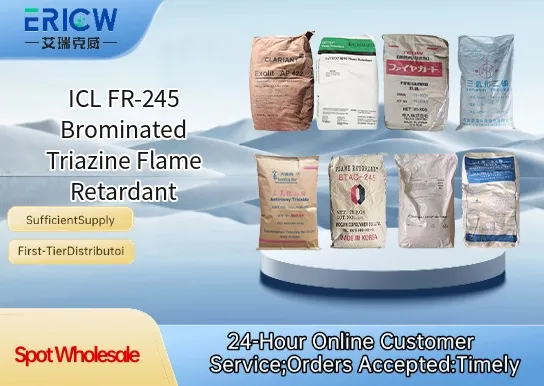
Highly effective brominated triazine chemistry delivering excellent flame retardancy in thermoplastics and engineering resins.
Good thermal stability up to 300 °C, supporting high-temperature processing such as injection molding and extrusion.
Low volatility and minimal migration, ensuring long-term performance retention in finished parts.
Compatible with common polymer matrices including ABS, PC/ABS, and polyolefins without significant impact on mechanical properties.
Meets stringent regulatory requirements for restricted substances, including RoHS compliance (exemptions applicable).
Electrical and electronic enclosures requiring UL 94 V-0 rating at thin wall sections.
Housing components for consumer appliances, including microwave ovens and power tools.
Automotive interior trim parts where flame resistance and dimensional stability are critical.
Connectors and circuit breaker housings in low-voltage distribution systems.
Industrial control panels and junction boxes exposed to elevated ambient temperatures.
| Chemical Type | Brominated triazine |
| Product Form | Free-flowing white to off-white crystalline powder |
| Appearance | Crystalline solid, odorless |
| Bromine Content (wt%) | 68–70% |
| Melting Point (°C) | 215–225 (DSC, onset) |
| Thermal Decomposition Onset (°C) | ≥300 (TGA, 5% weight loss, N₂ atmosphere) |
| Moisture Content (wt%) | <0.2% |
| Key Regulatory Status | RoHS-compliant (EU Directive 2011/65/EU, Annex III exemptions apply); REACH registered |
Q1: What types of polymers is ICL FR-245 typically used in?
A: ICL FR-245 is primarily formulated for use in engineering thermoplastics such as polyamide (PA6 and PA66), polybutylene terephthalate (PBT), and polycarbonate blends. Its thermal stability and compatibility make it suitable for melt-processing applications requiring UL94 V-0 or V-1 performance.
Q2: How does FR-245 compare to other brominated flame retardants in terms of thermal processing stability?
A: FR-245 exhibits enhanced thermal stability compared to many conventional aliphatic brominated compounds, allowing it to withstand typical polymer processing temperatures (up to ~280°C) without significant decomposition or discoloration—making it well-suited for high-temperature engineering resins.
Q3: Is FR-245 compatible with common antimony synergists?
A: Yes, FR-245 is designed to work effectively with antimony trioxide (Sb₂O₃) as a synergist, enabling optimized flame-retardant efficiency at lower total additive loading levels in halogen-based systems.
Q4: What are the key handling and safety considerations during compounding?
A: As with all fine organic powders, appropriate dust control measures (e.g., local exhaust ventilation) should be implemented during handling. FR-245 is not classified as acutely toxic, but standard industrial hygiene practices—including gloves and eye protection—are recommended to minimize incidental contact or inhalation.
Contact With Us:
E-mail: wangxingqiang@ericwchem.com
Have a Questions? Call Us:
Add:
Building A1, Jiete Industrial Park, Huangpu District, Guangzhou City, Guangdong Province, China