English
 Español
 tiếng việt
 русский
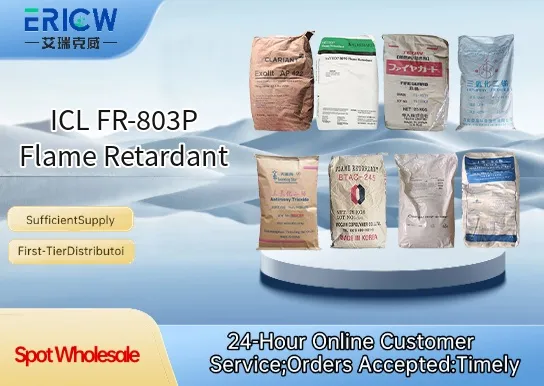
Halogen-free, phosphorus-based flame retardant offering excellent fire safety performance without generating corrosive or toxic fumes during combustion.
High thermal stability suitable for processing temperatures up to 300 °C, enabling compatibility with engineering thermoplastics.
Low water solubility and superior migration resistance, ensuring long-term flame-retardant efficacy in demanding environments.
Good compatibility with polyamide (PA6, PA66), polybutylene terephthalate (PBT), and other high-performance polymers.
Meets stringent regulatory requirements including UL 94 V-0 at 1.6 mm and EN 13501-1 Euroclass B-s1,d0 classification.
Electrical and electronic components requiring UL-certified flame retardancy, such as connectors, housings, and circuit breaker parts.
Automotive interior parts including under-hood components, control modules, and sensor housings.
Industrial automation enclosures and power distribution units exposed to elevated operating temperatures.
LED lighting fixtures where low smoke density and halogen-free composition are critical for indoor air quality.
Railway transportation interiors complying with EN 45545-2 fire safety standards for rolling stock.
| Chemical Type | Organophosphorus compound |
| Product Form | Free-flowing white granules |
| Appearance | Off-white to pale yellow granules |
| Density (23 °C) | 1.45–1.55 g/cm³ |
| Melting Range | 270–290 °C |
| Moisture Content (max.) | 0.15 wt% |
| pH (1% aqueous dispersion) | 5.5–7.0 |
| Primary Applications | Flame retardant additive for engineering thermoplastics (PA, PBT) |
Q1: What types of polymers is ICL FR-803P compatible with?
A: ICL FR-803P is primarily designed for use in thermoplastic polyolefins such as polypropylene (PP) and polyethylene (PE), including both homopolymers and copolymers. It demonstrates good compatibility and dispersion in non-polar resin systems and is commonly incorporated into flame-retardant compounds for wire & cable, automotive interior parts, and building materials.
Q2: How does ICL FR-803P achieve flame retardancy?
A: ICL FR-803P functions primarily through a condensed-phase mechanism, promoting char formation on the polymer surface during thermal decomposition. This char layer acts as a physical barrier that insulates the underlying material, reduces heat feedback, and limits the release of flammable volatiles — thereby suppressing flame propagation without relying on halogenated chemistry.
Q3: Is ICL FR-803P suitable for applications requiring low smoke and low toxicity?
A: Yes — as a non-halogenated, phosphorus-based flame retardant, ICL FR-803P contributes to reduced smoke density and lower generation of corrosive or toxic gases during combustion compared to many traditional brominated or antimony-containing systems. Its performance aligns well with industry expectations for improved fire safety profiles in enclosed or public-use environments.
Q4: What is the typical dosage range for effective flame retardancy?
A: The required dosage depends on the base polymer, desired flame rating (e.g., UL 94 V-0, V-2), and presence of synergists or fillers. In polypropylene, ICL FR-803P is typically used at low concentrations, generally ranging from 0.1% to 2% by weight — often in combination with other flame-retardant additives to optimize balance between performance, processability, and mechanical properties.
Q5: Does ICL FR-803P affect polymer processing or end-product mechanical properties?
A: When properly compounded, ICL FR-803P exhibits favorable thermal stability and minimal impact on melt flow and extrusion behavior. It generally maintains good retention of tensile strength and impact resistance in PP formulations, though final property outcomes depend on formulation design, compounding parameters, and the presence of stabilizers or reinforcing agents.
Contact With Us:
E-mail: wangxingqiang@ericwchem.com
Have a Questions? Call Us:
Add:
Building A1, Jiete Industrial Park, Huangpu District, Guangzhou City, Guangdong Province, China