English
 Español
 tiếng việt
 русский
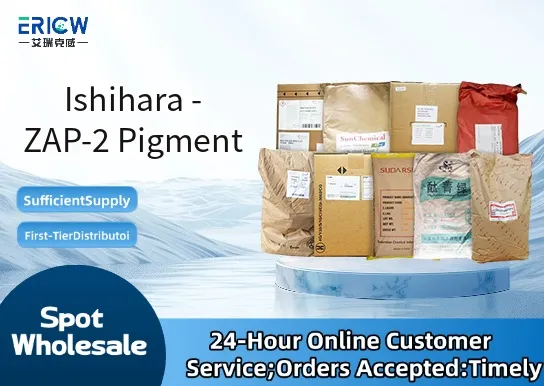
High thermal stability up to 280°C, enabling compatibility with high-temperature polymer processing.
Excellent lightfastness and weather resistance, meeting ISO 105-B02 and ASTM D4303 standards.
Low heavy metal content, compliant with EU REACH and RoHS 3 directives for restricted substances.
Optimized particle size distribution (D50 ≈ 0.35 µm) for enhanced dispersion and color strength in demanding matrices.
Non-migrating formulation ensuring long-term color integrity in PVC, polyolefins, and engineering resins.
Coloration of polypropylene (PP) and polyethylene (PE) fibers and injection-molded parts.
High-performance automotive interior plastics requiring UV durability and low VOC emission.
Masterbatch production for food-contact-approved packaging films (EU 10/2011 compliant).
Engineering thermoplastics including ABS, PC, and PBT used in consumer electronics housings.
Exterior architectural coatings and industrial coil coatings demanding chalk resistance and gloss retention.
| Chemical Type | Complex inorganic colored pigment (CICP), zinc iron chromite-based |
| Product Form | Free-flowing dry powder |
| Appearance | Dark greenish-black granular powder |
| Primary Applications | Polymer coloration, industrial coatings, masterbatches |
| Key Features | Heat stable, non-bleeding, chemically inert, low oil absorption |
| Benefits | Reduced filtration pressure, improved batch consistency, extended equipment service life |
| Storage Conditions | Store in cool, dry, well-ventilated area; protect from moisture and direct sunlight |
| Regulatory Compliance | REACH registered, RoHS 3 compliant, FDA non-listed (for indirect food contact) |
Q1: What is the primary function of ZAP-2 in polymer systems?
A: ZAP-2 is a high-performance zinc-based pigment designed primarily to provide synergistic flame retardancy and smoke suppression in thermoplastics and thermosets, especially halogen-free formulations where it enhances char formation and reduces heat release during combustion.
Q2: Is ZAP-2 compatible with common engineering plastics such as polypropylene, polyethylene, and polyamide?
A: Yes, ZAP-2 demonstrates good compatibility and dispersion stability in non-polar and semi-crystalline polymers including PP, PE, and PA. Optimal performance typically requires appropriate surface treatment and melt compounding conditions to ensure uniform distribution and avoid agglomeration.
Q3: How does ZAP-2 differ from conventional zinc borate or zinc stearate additives?
A: Unlike standard zinc borate or zinc stearate, ZAP-2 features a proprietary composite structure that integrates zinc oxide with modified phosphate and silicate components, delivering improved thermal stability, reduced volatility during processing, and enhanced synergy with other flame-retardant co-additives like melamine polyphosphate or aluminum hydroxide.
Q4: What are the recommended handling and storage conditions for ZAP-2?
A: ZAP-2 should be stored in a cool, dry environment under sealed conditions to prevent moisture absorption. It is non-hazardous under normal handling but should be processed using standard industrial hygiene practices—avoid inhalation of dust and use appropriate local exhaust ventilation during dry blending or feeding operations.
Contact With Us:
E-mail: wangxingqiang@ericwchem.com
Have a Questions? Call Us:
Add:
Building A1, Jiete Industrial Park, Huangpu District, Guangzhou City, Guangdong Province, China