English
 Español
 tiếng việt
 русский
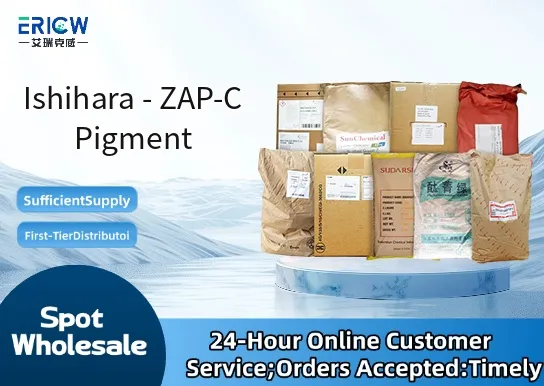
Highly stable zinc aluminum phosphate-based anti-corrosive pigment.
Non-toxic and heavy-metal-free, compliant with RoHS and REACH regulations.
Excellent dispersion stability in waterborne and solvent-based coating systems.
Effective cathodic protection and barrier functionality for ferrous substrates.
Low abrasivity, preserving equipment integrity during milling and application.
Waterborne primers for automotive OEM and refinish coatings.
Anti-corrosive primers for industrial maintenance and infrastructure steel structures.
Marine-grade protective coatings for offshore platforms and ship hulls.
Eco-friendly coil coatings requiring low-VOC, non-chromate alternatives.
| Chemical Type | Zinc aluminum phosphate complex |
| Product Form | Fine dry powder |
| Appearance | Off-white to light gray free-flowing powder |
| Primary Applications | Anti-corrosive primers, protective coatings |
| Key Features | Chromium-free, pH-stabilized, low-soluble ion release |
| Benefits | Enhanced film durability, reduced blistering, improved intercoat adhesion |
| Storage Conditions | Store in cool, dry place; keep container tightly sealed |
| Shelf Life | 24 months from date of manufacture under recommended conditions |
Q1: What is the primary function of ZAP-C Pigment in polymer systems?
A: ZAP-C Pigment is a specialized heat-stable, non-migrating colorant designed to provide consistent chromatic performance and excellent dispersion in high-temperature thermoplastic processing, particularly in polyolefins and engineering resins.
Q2: Is ZAP-C suitable for food-contact applications?
A: ZAP-C is formulated without heavy metals or restricted aromatic amines commonly associated with azo-based pigments. While it is not pre-certified for all food-contact regulations, its composition supports compliance pathways where regulatory evaluation and end-product testing are conducted by the compounder or converter.
Q3: How does ZAP-C compare to conventional organic pigments in terms of thermal stability?
A: ZAP-C exhibits significantly enhanced thermal stability compared to standard organic pigments, maintaining color integrity during extended residence times at temperatures up to 300°C—making it well-suited for demanding extrusion and injection molding processes.
Q4: What is the recommended dosage range for optimal performance?
A: Dosage depends on the base polymer, desired shade intensity, and processing conditions; however, ZAP-C is typically used at low concentrations, generally ranging from 0.1% to 2% by weight, with most applications falling within the lower half of this range.
Contact With Us:
E-mail: wangxingqiang@ericwchem.com
Have a Questions? Call Us:
Add:
Building A1, Jiete Industrial Park, Huangpu District, Guangzhou City, Guangdong Province, China