English
 Español
 tiếng việt
 русский
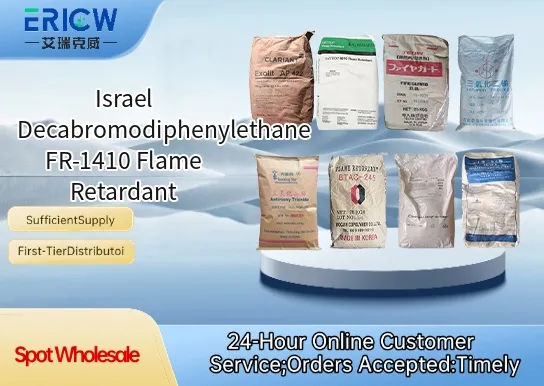
High bromine content (≥82%) ensuring excellent flame inhibition efficiency in polymer matrices.
Thermally stable up to 320°C, minimizing decomposition during standard processing of engineering plastics.
Low volatility and negligible migration, supporting long-term flame-retardant performance and regulatory compliance.
Compatible with common thermoplastics including ABS, HIPS, and PC/ABS blends without compromising mechanical properties.
Non-dusting granular form enhances handling safety and metering accuracy in industrial compounding lines.
Flame-retarded ABS for consumer electronics housings and business equipment enclosures.
HIPS-based electrical junction boxes and outlet covers requiring UL94 V-0 rating.
PC/ABS blends used in automotive interior components such as dashboards and trim panels.
Engineering thermoplastic compounds for telecommunications infrastructure hardware.
Industrial appliance casings where balanced flame resistance, impact strength, and processability are critical.
| Chemical Type | Decabromodiphenylethane (DBDPE) |
| Product Form | Free-flowing granules |
| Appearance | White to off-white granules |
| Bromine Content | ≥82.0 wt% |
| Thermal Decomposition Onset (TGA, 5% weight loss) | ≥320°C (air, 10°C/min) |
| Particle Size Distribution | D50: 300–500 µm |
| Moisture Content | ≤0.1 wt% |
| Heavy Metals (Pb, Cd, Hg, Cr⁶⁺) | Compliant with RoHS 2.0 |
Q1: What is the primary chemical composition and structural advantage of FR-1410?
A: FR-1410 is a brominated ethane-based flame retardant, specifically decabromodiphenylethane. Its fully substituted ethane backbone provides superior thermal stability compared to diphenyl ether analogues, reducing volatility and enhancing retention during high-temperature polymer processing.
Q2: In which polymer systems is FR-1410 most commonly used?
A: FR-1410 is widely employed in engineering thermoplastics such as ABS, HIPS, and PC/ABS blends, where it delivers effective flame retardancy without significantly compromising mechanical properties or melt flow behavior. It is also suitable for certain thermoset applications requiring low smoke and good processability.
Q3: How does FR-1410 compare to decabromodiphenyl ether (decaBDE) in terms of regulatory acceptance and performance?
A: Unlike decaBDE, FR-1410 is not subject to global phase-out restrictions under major regulatory frameworks due to its distinct chemical structure and lower bioaccumulation potential. It offers comparable flame-retardant efficiency but with improved thermal stability and reduced risk of debromination during processing.
Q4: What are typical dosage levels required to achieve UL94 V-0 rating in ABS formulations?
A: Dosage depends on the base resin, additive package, and target flame class, but FR-1410 is typically used at low concentrations—generally ranging from 0.1% to 2% by weight—in combination with synergists like antimony trioxide—to meet UL94 V-0 at 1.6 mm thickness.
Contact With Us:
E-mail: wangxingqiang@ericwchem.com
Have a Questions? Call Us:
Add:
Building A1, Jiete Industrial Park, Huangpu District, Guangzhou City, Guangdong Province, China