English
 Español
 tiếng việt
 русский
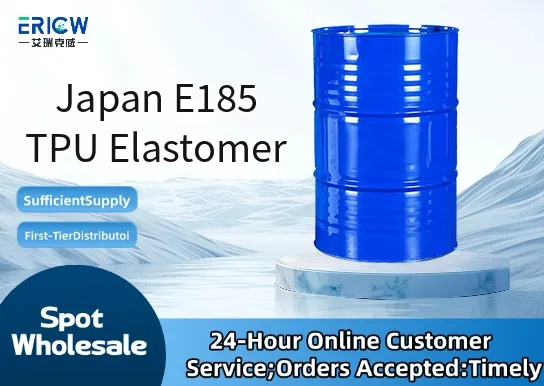
Excellent melt processability for high-speed extrusion and injection molding.
Outstanding abrasion resistance and long-term mechanical durability.
Good low-temperature flexibility down to –30 °C without significant stiffening.
High transparency and excellent optical clarity in thin-gauge applications.
Hydrolysis-resistant formulation suitable for humid or marine-environment exposure.
Medical tubing and fluid-handling components requiring biocompatibility support.
Precision extruded profiles for automotive interior trim and sealing systems.
Transparent protective films and overmolded grips for consumer electronics.
Flexible connectors and dynamic cable jacketing in industrial automation.
High-clarity sportswear components including watch bands and athletic wear overlays.
| Chemical Type | Aliphatic polyester-based thermoplastic polyurethane |
| Product Form | Natural pellets, free-flowing, uniform size |
| Appearance | Translucent ivory granules, no visible specks or discoloration |
| Density (g/cm³) | 1.18–1.22 (ASTM D792) |
| Melt Flow Index (g/10 min) | 15–22 @ 210 °C / 2.16 kg (ASTM D1238) |
| Shore A Hardness | 85 ± 3 (ASTM D2240) |
| Tensile Strength (MPa) | 32–38 (ASTM D412) |
| Elongation at Break (%) | 550–620 (ASTM D412) |
Q1: What is the primary function of Japan E185 TPU Elastomer in polymer formulations?
A: Japan E185 TPU Elastomer is primarily used as a high-performance thermoplastic polyurethane modifier to enhance flexibility, abrasion resistance, and low-temperature toughness in rigid or semi-crystalline polymer systems—especially in engineering plastics such as ABS, PC, and blends thereof.
Q2: Is Japan E185 compatible with common processing methods like injection molding and extrusion?
A: Yes, Japan E185 exhibits excellent melt processability and thermal stability, making it well-suited for conventional thermoplastic processing techniques including injection molding, extrusion, and two-shot molding—without requiring special drying or equipment modifications beyond standard TPU handling practices.
Q3: How does Japan E185 differ from general-purpose TPU grades in terms of performance profile?
A: Japan E185 is engineered for superior interfacial adhesion and dispersion in multiphase polymer systems, offering enhanced compatibility with polar resins and improved mechanical retention after aging or environmental exposure—distinguishing it from commodity TPUs optimized solely for monolithic film or elastomeric applications.
Q4: Can Japan E185 be used in applications requiring regulatory compliance for indirect food contact or medical devices?
A: Japan E185 is formulated without intentionally added heavy metals or restricted plasticizers, and its base chemistry supports compliance pathways for indirect food contact and certain non-implantable medical device applications—however, final regulatory approval depends on the full formulation, processing conditions, and end-use requirements.
Contact With Us:
E-mail: wangxingqiang@ericwchem.com
Have a Questions? Call Us:
Add:
Building A1, Jiete Industrial Park, Huangpu District, Guangzhou City, Guangdong Province, China