English
 Español
 tiếng việt
 русский
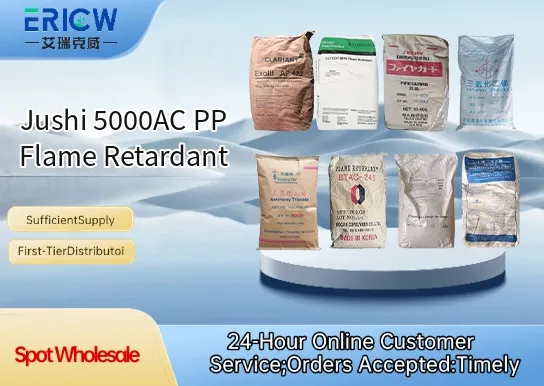
Halogen-free formulation ensuring low smoke density and zero corrosive gas emission during combustion.
Excellent thermal stability compatible with standard polypropylene processing temperatures (up to 240 °C).
Good dispersion and compatibility in PP matrix, minimizing blooming and maintaining long-term mechanical integrity.
UL 94 V-2 rated at 1.6 mm thickness, meeting key flammability requirements for semi-rigid applications.
RoHS and REACH compliant, supporting sustainable manufacturing and global regulatory acceptance.
Electrical enclosures and junction boxes for indoor residential and commercial use.
Housing components for consumer electronics, including power adapters and charging stations.
Automotive interior trim parts requiring flame-retardant performance without halogen content.
Industrial control panels and non-load-bearing structural housings in low-voltage equipment.
Medical device casings where low-smoke, non-toxic fire safety is critical.
| Chemical Type | Organophosphorus-based halogen-free flame retardant |
| Product Form | Pellets |
| Appearance | Off-white to light beige homogeneous pellets |
| Density | 1.35–1.42 g/cm³ (at 23 °C) |
| Melt Flow Rate (MFR) | 25–35 g/10 min (230 °C/2.16 kg) |
| Onset Decomposition Temperature | ≥280 °C (TGA, air atmosphere) |
| Primary Applications | Flame-retarded polypropylene compounds for electrical & electronic housings |
| Key Features | Halogen-free, UL 94 V-2 compliant, good processability, low smoke toxicity |
Q1: What is the primary flame retardant mechanism of Jushi 5000AC in polypropylene?
A: Jushi 5000AC operates primarily through a condensed-phase mechanism, promoting char formation and reducing the release of flammable volatiles during thermal decomposition. It is designed to enhance the inherent flame resistance of PP without significantly compromising mechanical properties or processability.
Q2: Is Jushi 5000AC compatible with common PP processing methods such as injection molding and extrusion?
A: Yes — Jushi 5000AC is formulated for excellent thermal stability and dispersion in polypropylene, making it fully suitable for standard melt-processing techniques including injection molding, extrusion, and blow molding. It exhibits minimal plate-out and good compatibility with typical PP stabilizer systems.
Q3: How does Jushi 5000AC affect the mechanical performance of PP compounds?
A: When properly compounded, Jushi 5000AC delivers balanced flame retardancy with limited impact on tensile strength, impact resistance, and flexural modulus. Its optimized particle size and surface treatment help maintain good interfacial adhesion and reduce property trade-offs commonly seen with halogen-free additives.
Q4: Can Jushi 5000AC be used in applications requiring regulatory compliance for low smoke and halogen-free performance?
A: Yes — Jushi 5000AC is a halogen-free, phosphorus-based flame retardant that supports low-smoke and low-toxicity combustion behavior. It is widely selected for applications where halogen-free requirements are specified, such as in certain automotive interior parts and electrical enclosures.
Contact With Us:
E-mail: wangxingqiang@ericwchem.com
Have a Questions? Call Us:
Add:
Building A1, Jiete Industrial Park, Huangpu District, Guangzhou City, Guangdong Province, China