English
 Español
 tiếng việt
 русский
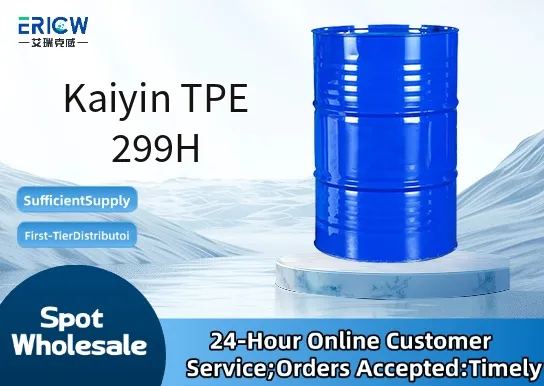
Excellent elasticity and recovery performance at room and elevated temperatures.
Good processability via injection molding, extrusion, and overmolding onto PP, ABS, and PS substrates.
Low odor and low extractables—compliant with ISO 10993-5 for cytotoxicity screening.
Soft-touch surface finish with adjustable Shore A hardness (range: 40–60 A).
Halogen-free formulation meeting RoHS and REACH regulatory requirements.
Automotive interior trim components (e.g., gear knobs, door armrests, control buttons).
Consumer electronics housings and protective grips (e.g., power tool handles, smart device cases).
Medical device non-invasive components (e.g., tubing connectors, ergonomic grips, wearable sensor housings).
Household appliance seals and soft-touch interfaces (e.g., blender lids, kettle handles, control dials).
Industrial equipment gaskets and vibration-damping pads requiring thermal stability up to 70°C.
| Chemical Type | Thermoplastic Elastomer (TPE) — Styrenic Block Copolymer (SBC) based |
| Product Form | Pellets |
| Appearance | Off-white to light beige granules, free-flowing |
| Shore A Hardness (ASTM D2240) | 50 ± 3 |
| Melt Flow Rate (2.16 kg, 200°C, ASTM D1238) | 18–22 g/10 min |
| Density (ASTM D792) | 0.98–1.01 g/cm³ |
| Tensile Strength (ASTM D412) | 8–10 MPa |
| Elongation at Break (ASTM D412) | 450–550 % |
Q1: What is the primary function of Kaiyin TPE 299H in thermoplastic elastomer formulations?
A: Kaiyin TPE 299H functions as a high-efficiency processing aid and melt flow modifier, designed to improve extrudability, reduce die swell, and enhance surface finish in TPE compounds—particularly in SEBS- and TPR-based systems.
Q2: Is Kaiyin TPE 299H compatible with common polymer matrices such as PP, PE, or PS blends?
A: Yes, it demonstrates good compatibility with polyolefin-rich TPE systems—including PP/SEBS and PE/SEBS blends—as well as styrenic thermoplastic elastomers. Compatibility should be verified experimentally for specific formulation chemistries and additive packages.
Q3: How should Kaiyin TPE 299H be incorporated into a compound during manufacturing?
A: It is typically added during the masterbatch or final compounding stage via twin-screw extrusion. Pre-drying is not required under standard conditions, but handling in low-humidity environments is recommended to maintain consistent dispersion performance.
Q4: Does Kaiyin TPE 299H affect the mechanical properties or thermal stability of the final TPE product?
A: When used within typical dosage ranges, it does not significantly compromise tensile strength, elongation, or thermal resistance. In fact, optimized use often supports improved dimensional stability and reduced post-extrusion warpage without sacrificing key performance attributes.
Contact With Us:
E-mail: wangxingqiang@ericwchem.com
Have a Questions? Call Us:
Add:
Building A1, Jiete Industrial Park, Huangpu District, Guangzhou City, Guangdong Province, China