English
 Español
 tiếng việt
 русский
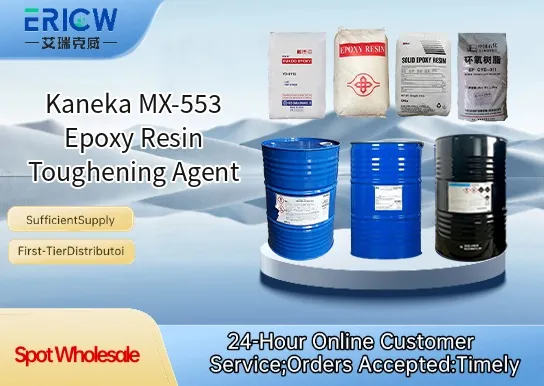
Reactive liquid modifier enabling significant toughness enhancement without compromising glass transition temperature (Tg)
Excellent compatibility with standard bisphenol-A and bisphenol-F epoxy resins
Low viscosity formulation facilitating easy handling, metering, and homogeneous dispersion
Enables high impact resistance and crack propagation resistance in cured epoxy networks
No volatile organic compounds (VOCs) — supports low-emission composite and adhesive formulations
Aerospace structural adhesives requiring high fracture toughness and thermal stability
Wind turbine blade matrix resins for improved delamination resistance
High-performance printed circuit board (PCB) laminates demanding reliability under thermal cycling
Automotive under-hood composites exposed to mechanical shock and elevated temperatures
Electrical encapsulation compounds requiring balanced mechanical strength and dielectric integrity
| Chemical Type | Reactive carboxyl-terminated polybutadiene (CTPB)-based toughener |
| Product Form | Liquid |
| Appearance | Pale yellow to light amber, clear, low-viscosity liquid |
| Primary Applications | Epoxy resin toughening for structural adhesives, composites, and encapsulants |
| Key Features | Reactive functionality, phase-separation control, Tg-neutral toughening |
| Benefits | Improved impact strength, reduced brittle failure, enhanced fatigue resistance |
| Storage Condition | Store at 10–25°C in tightly sealed containers; protect from moisture and direct sunlight |
| Shelf Life | 12 months from date of manufacture when stored under recommended conditions |
Q1: What is the primary function of Kaneka MX-553 in epoxy systems?
A: Kaneka MX-553 is a reactive liquid toughening agent designed to enhance the fracture toughness and impact resistance of cured epoxy resins without significantly compromising modulus, glass transition temperature (Tg), or chemical resistance.
Q2: How is MX-553 incorporated into epoxy formulations?
A: MX-553 is typically added directly to the epoxy resin component prior to curing agent addition. It is fully miscible with common diglycidyl ether of bisphenol-A (DGEBA) and novolac epoxies, and requires no special handling beyond standard industrial mixing protocols.
Q3: Does MX-553 affect the pot life or cure kinetics of epoxy systems?
A: MX-553 is chemically inert toward most amine and anhydride curing agents under ambient conditions and does not accelerate or inhibit the cure reaction. Pot life remains largely unchanged, though slight reductions may occur at elevated dosages—formulation-specific evaluation is recommended.
Q4: Is MX-553 suitable for high-performance composites or structural adhesives?
A: Yes—MX-553 is widely used in aerospace-grade prepregs, wind blade matrices, and high-strength structural adhesives where improved delamination resistance and crack propagation suppression are critical performance requirements.
Q5: What is the typical dosage range for effective toughening?
A: Effective toughening is generally achieved at low concentrations, typically ranging from 0.1% to 2% by weight relative to the epoxy resin. Optimal dosage depends on the specific resin system, cure schedule, and target balance of toughness versus rigidity.
Contact With Us:
E-mail: wangxingqiang@ericwchem.com
Have a Questions? Call Us:
Add:
Building A1, Jiete Industrial Park, Huangpu District, Guangzhou City, Guangdong Province, China