English
 Español
 tiếng việt
 русский
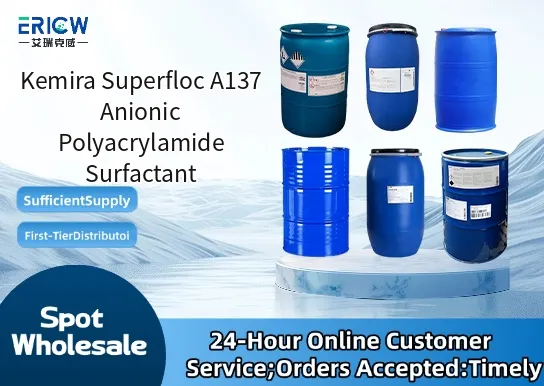
High molecular weight anionic polyacrylamide optimized for efficient flocculation in high-solids, low-charge wastewater streams.
Excellent shear stability and rapid floc formation, enabling robust performance in mechanical dewatering processes.
Low residual monomer content (<0.05%), meeting stringent regulatory requirements for industrial water treatment applications.
Consistent batch-to-batch performance due to controlled polymerization and rigorous quality assurance.
Compatible with a wide range of inorganic coagulants, allowing flexible integration into existing treatment trains.
Municipal and industrial wastewater clarification in primary and secondary sedimentation tanks.
Dewatering of sludge in belt filter presses, centrifuges, and vacuum filters across pulp & paper mills.
Solid–liquid separation in mineral processing tailings management and coal washing operations.
Enhanced settling in potable water treatment plants handling surface water with variable turbidity.
Sludge conditioning prior to thermal drying or incineration in advanced waste-to-energy facilities.
| Chemical Type | Anionic polyacrylamide (PAM) |
| Product Form | White granular powder |
| Appearance | Free-flowing, non-hygroscopic granules |
| Charge Density | 20–25 mol% (carboxylate groups) |
| Molecular Weight | 12–15 million g/mol (viscometric) |
| pH of 0.1% Aqueous Solution | 6.5–7.5 |
| Residual Acrylamide | ≤ 0.05% w/w |
| Primary Applications | Wastewater clarification, sludge dewatering, mineral separation |
Q1: What is the primary function of Kemira Superfloc A137 in industrial water treatment applications?
A: Kemira Superfloc A137 functions primarily as a high-molecular-weight anionic flocculant, promoting rapid aggregation and settling of suspended solids in clarification, thickening, and dewatering processes—especially in wastewater streams containing fine, negatively charged particles such as clays, metal hydroxides, or organic colloids.
Q2: How should Kemira Superfloc A137 be dissolved and activated for optimal performance?
A: It should be gradually dispersed into clean, low-turbidity water under gentle mechanical agitation to avoid fisheyes and polymer degradation. Dissolution typically requires 30–60 minutes with continuous mixing at low shear; full activation is achieved once the solution appears homogeneous and viscous, with no undissolved gel particles.
Q3: Is Kemira Superfloc A137 compatible with cationic coagulants commonly used in dual-polymer systems?
A: Yes—it is specifically designed for use in sequential dosing configurations with cationic coagulants (e.g., polyaluminum chloride or cationic polymers), where the cationic component neutralizes surface charge and the anionic Superfloc A137 bridges particles to form robust, shear-resistant flocs.
Q4: What are typical handling and storage recommendations to maintain product stability?
A: Store in original, tightly sealed containers in a cool, dry, well-ventilated area away from direct sunlight and sources of heat or moisture. Avoid prolonged exposure to high humidity or temperatures above 35 °C, as these may accelerate physical aging or reduce dissolution efficiency over time.
Q5: Can Kemira Superfloc A137 be used in potable water treatment?
A: Kemira Superfloc A137 is not certified for direct use in drinking water treatment under major regulatory frameworks; it is formulated and validated for industrial and municipal wastewater applications. For potable water applications, consult Kemira’s portfolio of NSF/ANSI Standard 60-compliant products.
Contact With Us:
E-mail: wangxingqiang@ericwchem.com
Have a Questions? Call Us:
Add:
Building A1, Jiete Industrial Park, Huangpu District, Guangzhou City, Guangdong Province, China