English
 Español
 tiếng việt
 русский
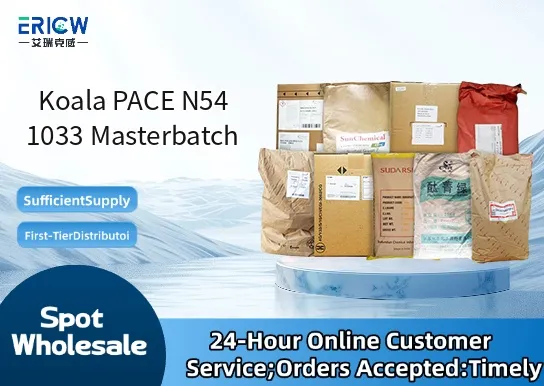
Highly concentrated, low-addition-ratio formulation for efficient pigment dispersion.
Excellent thermal stability suitable for processing temperatures up to 280 °C.
Carrier resin compatible with polyolefins including PP and HDPE.
Low migration and blooming resistance ensuring long-term color consistency.
Free from heavy metals and compliant with EU RoHS and REACH regulations.
Automotive interior trim components.
Food-grade packaging films and containers.
Household appliance housings and panels.
Medical device casings requiring color stability and regulatory compliance.
Industrial piping and fittings for demanding environmental conditions.
| Chemical Type | Pigment-based polyolefin masterbatch |
| Product Form | Free-flowing granules |
| Appearance | Uniform black granules |
| Primary Applications | Coloration of PP, HDPE, and LDPE |
| Key Features | High dispersion efficiency, low dust generation |
| Benefits | Reduced processing time, improved batch-to-batch reproducibility |
| Recommended Dosage | 1–3 wt% depending on final color strength |
| Storage Conditions | Store in dry, cool environment (<30 °C); keep sealed to prevent moisture absorption |
Q1: What is the primary function of Koala PACE N54 1033 Masterbatch in polymer processing?
A: Koala PACE N54 1033 Masterbatch is a high-performance processing aid designed to improve melt flow, reduce extrusion pressure, and enhance surface finish in polyolefin-based compounds—particularly during high-speed film blowing, blow molding, and fiber spinning operations.
Q2: Which polymer matrices is this masterbatch compatible with?
A: It is specifically formulated for compatibility with polyethylene (LDPE, LLDPE, HDPE) and polypropylene (homopolymer and copolymer), and demonstrates good dispersion stability under standard compounding and melt-processing conditions.
Q3: How should Koala PACE N54 1033 be incorporated into production?
A: It is typically introduced via gravimetric or volumetric dosing directly into the main polymer stream at the feed throat of extruders or injection molding machines—no pre-drying is required, and it achieves uniform dispersion without additional mixing steps.
Q4: Does this masterbatch affect the mechanical or optical properties of the final product?
A: When used within recommended dosage ranges, it maintains baseline tensile strength, impact resistance, and haze levels—while often improving gloss and reducing die buildup that can otherwise compromise clarity and dimensional consistency.
Q5: What are typical dosage guidelines for optimal performance?
A: Dosage depends on formulation requirements and processing conditions, but it is generally effective at low concentrations—typically ranging from 0.1% to 2% by weight relative to the base resin.
Contact With Us:
E-mail: wangxingqiang@ericwchem.com
Have a Questions? Call Us:
Add:
Building A1, Jiete Industrial Park, Huangpu District, Guangzhou City, Guangdong Province, China