English
 Español
 tiếng việt
 русский
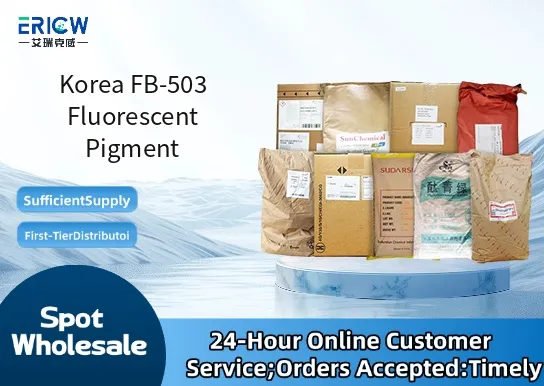
High-intensity fluorescence under UV and daylight illumination.
Excellent thermal stability up to 220°C for processing in thermoplastics and coatings.
Good dispersibility in both polar and non-polar resin systems.
Low migration tendency, ensuring color fidelity in polymer matrices.
Compliant with REACH and RoHS directives for safe industrial use.
Fluorescent inks for security printing and anti-counterfeiting labels.
High-visibility safety signage and traffic control devices.
UV-responsive coatings for architectural and industrial finishes.
Functional masterbatches for PET, PS, and ABS packaging materials.
Specialty plastics used in consumer electronics housings and promotional items.
| Chemical Type | Organic fluorescent dye derivative |
| Product Form | Free-flowing fine powder |
| Appearance | Bright yellow-green powder |
| Primary Applications | Plastics, inks, coatings, and masterbatches |
| Key Features | UV-A (365 nm) excitable, daylight-visible fluorescence |
| Particle Size (D50) | 12–18 μm |
| Heat Resistance | Up to 220°C (short-term) |
| Lightfastness (ISO 105-B02) | Grade 4–5 (moderate to good) |
Q1: What types of resin systems is Korea FB-503 compatible with?
A: Korea FB-503 demonstrates good compatibility with a broad range of thermoplastic and thermosetting systems, including ABS, PS, PVC, acrylics, and certain polyesters. It is not recommended for use in highly polar or strongly acidic polymer matrices without prior compatibility testing.
Q2: How does FB-503 perform under UV exposure and outdoor weathering?
A: FB-503 offers moderate UV stability suitable for indoor applications and short-to-medium term outdoor use. For extended outdoor service life, co-stabilization with UV absorbers and HALS is strongly advised to mitigate fluorescence fading and potential pigment degradation.
Q3: What is the typical dosage range for achieving strong fluorescent effect?
A: The optimal loading level generally ranges from 0.1% to 2% by weight, depending on the base resin transparency, desired intensity, and processing conditions. Lower concentrations are often sufficient in clear matrices, while higher loadings may be needed in semi-crystalline or opaque systems.
Q4: Can FB-503 be used in food-contact plastics?
A: Korea FB-503 is not pre-qualified for direct food-contact applications. Its use in such applications requires full regulatory review—including migration assessment and compliance verification—by the end-product manufacturer in accordance with applicable regional regulations.
Contact With Us:
E-mail: wangxingqiang@ericwchem.com
Have a Questions? Call Us:
Add:
Building A1, Jiete Industrial Park, Huangpu District, Guangzhou City, Guangdong Province, China