English
 Español
 tiếng việt
 русский
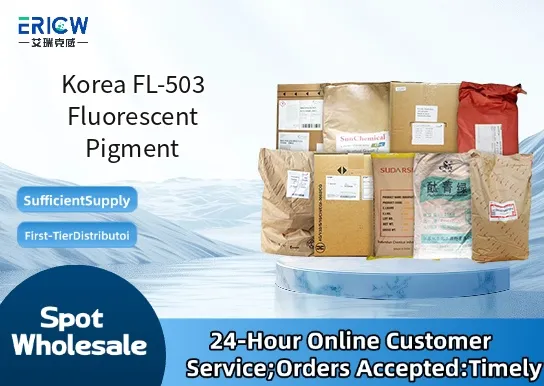
High-intensity fluorescence under UV-A (365 nm) and visible blue light excitation
Excellent thermal stability up to 220°C for short-term processing in polymer melts
Good dispersion stability in polar and non-polar organic media without surfactant assistance
Low migration tendency in PVC, PS, and ABS resin systems
Non-halogenated composition compliant with RoHS Directive 2011/65/EU
Security printing inks for banknotes and ID documents
Fluorescent masterbatches for automotive interior trim components
UV-responsive coatings on safety signage and emergency egress markings
Special-effect inks for premium packaging and luxury product labeling
Fluorescent additives in optical calibration standards and analytical reference materials
| Chemical Type | Disazo-based fluorescent organic pigment |
| Product Form | Free-flowing fine powder |
| Appearance | Bright yellow-green solid with consistent particle morphology |
| Primary Applications | Polymer masterbatches, solvent-based inks, UV-curable coatings |
| Key Features | UV-stable, non-bleeding, high chroma under ambient and blacklight conditions |
| Benefits | Enables low-addition-level fluorescence (0.1–0.5 wt%) with minimal impact on base resin properties |
| Storage Conditions | Store in original sealed container at 15–25°C, away from direct sunlight and moisture |
| Regulatory Compliance | REACH registered; fully documented SDS available upon request |
Q1: What types of resin systems is Korea FL-503 compatible with?
A: Korea FL-503 is formulated for compatibility with common thermoplastic and thermosetting systems, including ABS, PS, PVC, acrylics, polyesters, and epoxy resins. Performance may vary depending on processing temperature and matrix polarity—pre-testing in the final formulation is recommended.
Q2: How does FL-503 perform under UV exposure and outdoor weathering?
A: FL-503 exhibits good initial fluorescent brightness under UV-A illumination; however, like most organic fluorescent pigments, its intensity may gradually diminish under prolonged UV exposure and environmental stress. For extended outdoor applications, co-stabilization with UV absorbers and HALS is advised to enhance retention of fluorescence.
Q3: What is the typical dosage range for optimal fluorescence in polymer applications?
A: Optimal loading generally ranges from 0.1% to 2% by weight, depending on the base polymer, desired chroma intensity, and part thickness. Higher concentrations do not always improve performance and may lead to aggregation or reduced dispersion stability—dispersion quality and particle size distribution are critical factors.
Q4: Can FL-503 be used in water-based coatings or inks?
A: FL-503 is supplied as a dry, non-surface-treated pigment powder and is not inherently dispersible in water. Successful incorporation into aqueous systems requires appropriate surfactants, dispersing aids, and high-shear stabilization—formulators should conduct compatibility and stability trials before scale-up.
Contact With Us:
E-mail: wangxingqiang@ericwchem.com
Have a Questions? Call Us:
Add:
Building A1, Jiete Industrial Park, Huangpu District, Guangzhou City, Guangdong Province, China