English
 Español
 tiếng việt
 русский
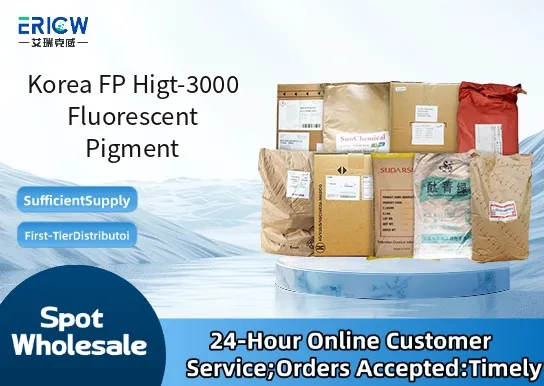
High-intensity fluorescence under UV-A (365 nm) and daylight exposure.
Excellent thermal stability up to 220°C for compatibility with polymer processing.
Good dispersion performance in both polar and non-polar resin systems.
Low migration tendency in PVC, ABS, PS, and polyolefin compounds.
Compliant with REACH Annex XVII and free of heavy metals (Pb, Cd, Hg, Cr⁶⁺).
Safety signage and emergency egress markings.
Fluorescent inks for security printing and brand authentication.
UV-responsive coatings for industrial identification tags.
High-visibility components in automotive interior trim.
Fluorescent masterbatches for extruded profiles and injection-molded parts.
| Chemical Type | Disazo-based fluorescent organic pigment |
| Product Form | Free-flowing fine powder |
| Appearance | Bright yellow-green solid with consistent particle size distribution |
| Primary Applications | Polymer coloration, solvent-based inks, UV-curable coatings |
| Key Features | High chroma, photostable under indoor conditions, low dust generation |
| Benefits | Enables vivid fluorescence without compromising mechanical properties of host polymers |
| Storage Conditions | Store in cool, dry place below 30°C; protect from direct sunlight and moisture |
| Regulatory Status | REACH compliant; RoHS 2.0 compatible; no SVHC substances above threshold |
Q1: What types of resins and polymer systems is Korea FP Higt-3000 compatible with?
A: Korea FP Higt-3000 exhibits good compatibility with a broad range of thermoplastic and thermosetting systems, including ABS, PS, PVC, acrylics, polyesters, and epoxy resins. Performance may vary depending on processing temperature and resin polarity, so preliminary compatibility testing is recommended for critical applications.
Q2: How does this pigment perform under UV exposure and outdoor weathering?
A: Korea FP Higt-3000 offers enhanced photostability compared to conventional fluorescent pigments due to its optimized molecular structure and surface treatment. While it is not fully UV-stable for long-term unshielded outdoor use, it delivers reliable fluorescence retention in indoor applications and short-to-medium term outdoor uses when incorporated into UV-resistant matrices or protected with topcoats.
Q3: Is Korea FP Higt-3000 suitable for use in food-contact or medical-grade polymers?
A: Korea FP Higt-3000 is intended for industrial and decorative applications only. It is not certified for direct food contact, pharmaceutical packaging, or implantable medical devices. Customers requiring regulatory compliance for such applications must conduct full material safety assessments and consult applicable regional regulations independently.
Q4: What is the typical dosage range for achieving strong fluorescent effect?
A: The pigment is highly efficient and typically used at low concentrations. Effective fluorescence intensity generally ranges from 0.1% to 2% by weight, depending on the base resin, desired brightness level, and processing method. Optimal loading should be determined through small-scale trials to balance performance, dispersion quality, and cost efficiency.
Q5: Does Korea FP Higt-3000 require special dispersion or processing conditions?
A: For optimal dispersion and fluorescence uniformity, standard high-shear mixing or extrusion is recommended. Pre-dilution in a carrier resin or use of compatible dispersing aids can improve distribution—especially in high-viscosity or low-melt-flow systems. Avoid prolonged residence time at temperatures above 280°C to preserve fluorescence integrity.
Contact With Us:
E-mail: wangxingqiang@ericwchem.com
Have a Questions? Call Us:
Add:
Building A1, Jiete Industrial Park, Huangpu District, Guangzhou City, Guangdong Province, China