English
 Español
 tiếng việt
 русский
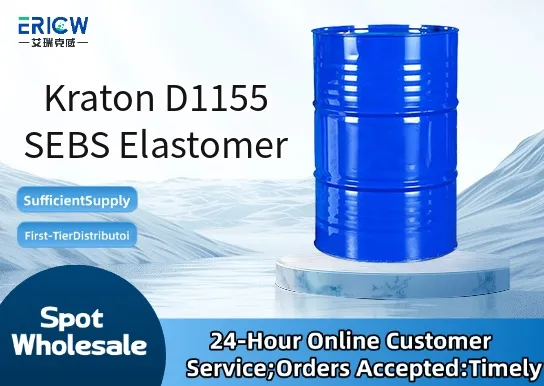
Thermoplastic elastomer based on styrene–ethylene/butylene–styrene (SEBS) triblock copolymer architecture.
Excellent melt processability via extrusion, injection molding, and blow molding without vulcanization.
Superior UV and thermal oxidative stability due to saturated mid-block backbone.
Good compatibility with polypropylene (PP), polyethylene (PE), and various plasticizers for compound formulation.
Soft, flexible, and tactile-friendly at room temperature with low compression set.
Soft-touch overmolding for consumer electronics housings and automotive interior trim.
TPE-based medical tubing and device components requiring ISO 10993-compatibility support.
High-clarity, low-extractable seals and gaskets for pharmaceutical packaging.
Flexible grips for hand tools, sporting goods, and personal care devices.
Adhesive modifier and tackifier resin in hot-melt pressure-sensitive adhesives (PSAs).
| Chemical Type | Styrene–Ethylene/Butylene–Styrene (SEBS) Triblock Copolymer |
| Product Form | Pellets |
| Appearance | Off-white to light tan, free-flowing pellets |
| Primary Applications | Soft-touch overmolding, medical-grade TPE compounds, PSA modifiers |
| Key Features | Thermoplastic processability, high elasticity, excellent aging resistance |
| Benefits | Reduced processing energy vs. thermosets; recyclable; no peroxide cure required |
| Typical Density (g/cm³) | 0.91–0.92 |
| Hardness (Shore A) | 45–55 |
Q1: What is Kraton D1155, and how does it differ from other SEBS grades?
A: Kraton D1155 is a linear triblock copolymer of styrene–ethylene/butylene–styrene (SEBS), specifically formulated to deliver balanced melt processability, softness, and elastic recovery. Compared to higher-styrene or higher-molecular-weight SEBS grades, D1155 offers improved flow characteristics and lower melt viscosity, making it particularly suitable for thin-wall extrusion, overmolding, and soft-touch applications where ease of processing and surface aesthetics are critical.
Q2: Is Kraton D1155 compatible with polypropylene (PP) and other polyolefins?
A: Yes, Kraton D1155 is widely used as a compatibilizer and impact modifier in PP-based thermoplastic elastomer (TPE) blends. Its ethylene/butylene mid-block provides excellent compatibility with polyolefin matrices, while the styrene end-blocks enhance dispersion and interfacial adhesion—resulting in improved toughness, flexibility, and thermal stability without compromising processability.
Q3: Can Kraton D1155 be used in medical or food-contact applications?
A: Kraton D1155 is manufactured under controlled conditions and is commonly selected for applications requiring regulatory compliance, including certain medical device components and food-contact articles. However, final regulatory acceptance depends on the full formulation, processing conditions, and intended use. Users must conduct appropriate testing and consult current regional regulatory guidance before commercial deployment.
Q4: How should Kraton D1155 be dried prior to processing?
A: While Kraton D1155 exhibits low inherent moisture sensitivity compared to many polar polymers, best practice recommends drying at 60–70 °C for 2–4 hours using desiccant or dehumidifying equipment—especially when high surface quality, consistent melt behavior, or extended processing stability is required. Avoid excessive temperatures or prolonged drying, as this may affect rheological performance.
Contact With Us:
E-mail: wangxingqiang@ericwchem.com
Have a Questions? Call Us:
Add:
Building A1, Jiete Industrial Park, Huangpu District, Guangzhou City, Guangdong Province, China