English
 Español
 tiếng việt
 русский
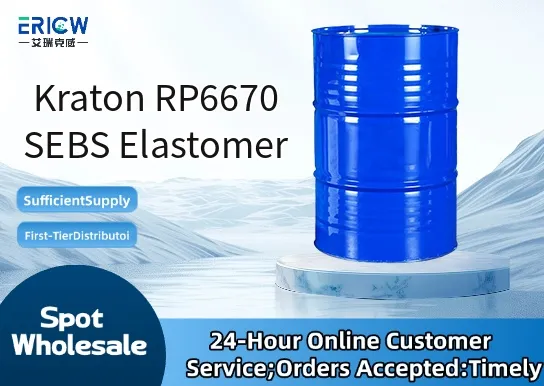
High melt strength and excellent melt stability for reliable extrusion and thermoforming processes.
Outstanding soft-touch feel and low coefficient of friction, ideal for premium overmolding applications.
Good UV and thermal aging resistance, maintaining mechanical integrity under moderate environmental exposure.
Low extractables and compliant with FDA 21 CFR §177.2600 for indirect food contact applications.
Easy to compound and process on standard thermoplastic equipment without requiring special drying or handling.
Premium soft-touch grips for power tools, hand-held electronics, and medical devices.
Overmolded seals and gaskets for consumer appliances and automotive interior components.
Flexible, non-slip surfaces for personal care product housings and cosmetic packaging.
Thermoformed trays and blister packaging requiring clarity, toughness, and dimensional stability.
Adhesive modifiers and tackifiers in hot-melt pressure-sensitive adhesive formulations.
| Chemical Type | Styrene–ethylene/butylene–styrene (SEBS) triblock copolymer |
| Product Form | Pellets |
| Appearance | Off-white to light tan, free-flowing pellets |
| Primary Applications | Soft-touch overmolding, flexible packaging, adhesive modification |
| Key Features | Thermoplastic elastomer with high elasticity and low compression set |
| Benefits | Process efficiency, recyclability, no vulcanization required |
| Processing Method | Extrusion, injection molding, thermoforming |
| Regulatory Compliance | FDA 21 CFR §177.2600 (indirect food contact), RoHS compliant |
Q1: What is the primary functional role of Kraton RP6670 in polymer formulations?
A: Kraton RP6670 is a selectively hydrogenated styrenic block copolymer (SEBS) elastomer designed primarily as a compatibilizer and impact modifier. It enhances melt strength, improves phase adhesion in polyolefin blends (e.g., PP/PE), and contributes to improved toughness and flexibility without significantly compromising stiffness.
Q2: Is Kraton RP6670 suitable for use in food-contact applications?
A: Kraton RP6670 is manufactured under controlled conditions appropriate for indirect food-contact applications where regulatory compliance is required. Formulators must validate final compound compliance with applicable regional regulations, as suitability depends on the full formulation, processing conditions, and end-use requirements.
Q3: How does Kraton RP6670 differ from standard SBS or non-hydrogenated thermoplastic elastomers?
A: Unlike conventional SBS, Kraton RP6670 undergoes full hydrogenation of the mid-block, resulting in superior thermal stability, UV resistance, and oxidative resistance. This enables broader processing windows (e.g., higher extrusion or injection molding temperatures) and longer service life in demanding environments compared to non-hydrogenated alternatives.
Q4: What are typical processing methods for Kraton RP6670-containing compounds?
A: Kraton RP6670 is compatible with standard thermoplastic processing techniques including twin-screw compounding, extrusion, injection molding, and overmolding. It exhibits good melt flow characteristics and thermal stability, allowing effective dispersion in polyolefin matrices without degradation under typical processing conditions.
Contact With Us:
E-mail: wangxingqiang@ericwchem.com
Have a Questions? Call Us:
Add:
Building A1, Jiete Industrial Park, Huangpu District, Guangzhou City, Guangdong Province, China