English
 Español
 tiếng việt
 русский
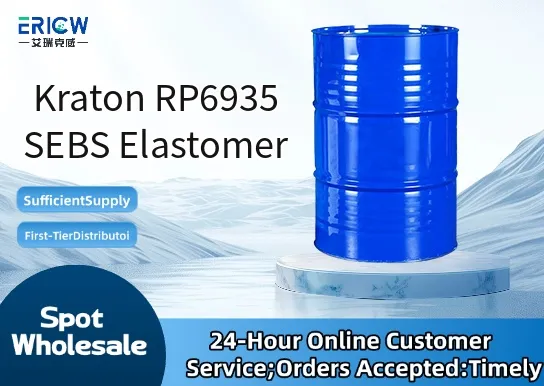
High melt flow index for excellent processability in extrusion and injection molding.
Outstanding soft-touch feel and low surface tack, ideal for overmolding applications.
Excellent thermal stability and long-term aging resistance under ambient and elevated temperatures.
Good compatibility with polypropylene (PP) and other polyolefins for thermoplastic vulcanizate (TPV) formulations.
Low extractables and compliant with FDA 21 CFR §177.2600 for food-contact-acceptable compounds (when compounded appropriately).
Soft-touch grips for power tools, consumer electronics, and medical device housings.
Overmolded seals and gaskets in automotive interior components.
Flexible, durable parts for personal care appliances such as hair dryers and electric toothbrushes.
Thermoplastic elastomer (TPE) blends for PP-based TPVs used in automotive trim and under-hood applications.
Medical tubing and non-sterile disposable device components requiring flexibility and chemical resistance.
| Chemical Type | Styrene–ethylene/butylene–styrene (SEBS) triblock copolymer |
| Product Form | Pellets |
| Appearance | Off-white to light tan, free-flowing pellets |
| Melt Flow Rate (ASTM D1238, 230 °C/2.16 kg) | 22–28 g/10 min |
| Styrene Content (by NMR) | 28–32 wt% |
| Hardness (Shore A, ASTM D2240) | 35–40 |
| Specific Gravity (ASTM D792) | 0.91–0.92 |
| Key Features | Thermoplastic elastomer with reversible physical crosslinks, recyclable, no vulcanization required |
Q1: What is the primary functional role of Kraton RP6935 in polymer formulations?
A: Kraton RP6935 is a styrenic block copolymer (SEBS) elastomer designed primarily as a compatibilizer and impact modifier—especially effective in polyolefin-based systems such as PP and HDPE blends, where it enhances melt strength, toughness, and phase adhesion without significantly compromising stiffness.
Q2: Is Kraton RP6935 suitable for applications requiring FDA compliance or food-contact approval?
A: Kraton RP6935 is manufactured under controlled conditions and may be incorporated into food-contact formulations where permitted by applicable regulatory frameworks; however, final compliance depends on the complete formulation, processing conditions, and end-use requirements—users must conduct their own regulatory assessment and validation.
Q3: How does Kraton RP6935 differ from standard SEBS grades in terms of processing behavior?
A: RP6935 features a tailored molecular architecture that provides improved thermal stability and lower melt viscosity compared to many conventional SEBS grades, facilitating easier extrusion and injection molding—particularly beneficial in high-throughput compounding and thin-wall applications.
Q4: Can Kraton RP6935 be used in thermoplastic vulcanizates (TPVs) or dynamic vulcanization processes?
A: While not formulated as a primary rubber phase in TPVs, Kraton RP6935 can serve as a performance-enhancing additive in certain TPV systems—particularly to refine dispersion, improve elasticity recovery, or adjust hardness profile—when combined with compatible crosslinkable elastomers such as EPDM.
Contact With Us:
E-mail: wangxingqiang@ericwchem.com
Have a Questions? Call Us:
Add:
Building A1, Jiete Industrial Park, Huangpu District, Guangzhou City, Guangdong Province, China