English
 Español
 tiếng việt
 русский
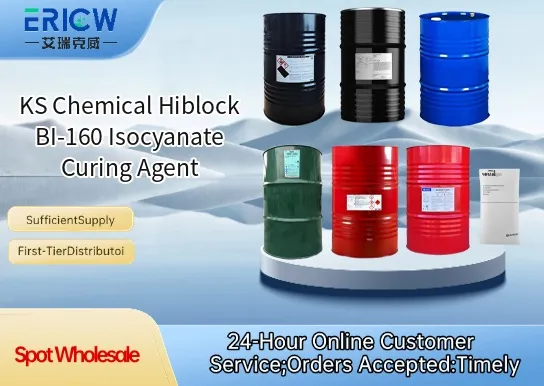
Low-viscosity aliphatic polyisocyanate offering excellent compatibility with hydroxyl-functional resins.
Non-yellowing performance ideal for high-clarity and color-stable coatings and adhesives.
Enhanced pot life control due to moderated reactivity compared to standard HDI-based curing agents.
Excellent weather resistance and UV stability in outdoor applications.
Compliant with REACH and meets VOC-reduction requirements for industrial coating formulations.
Automotive clearcoats and OEM topcoats requiring long-term gloss retention.
High-performance industrial maintenance coatings for metal and concrete substrates.
Architectural facade coatings exposed to harsh environmental conditions.
Two-component polyurethane adhesives for bonding composites and laminated glass.
UV-resistant plastic coatings and flexible film coatings for signage and decorative films.
| Chemical Type | Aliphatic polyisocyanate (HDI trimer derivative) |
| Product Form | Liquid |
| Appearance | Colorless to pale yellow transparent liquid |
| NCO Content (wt %) | 15.8–16.2% |
| Viscosity (25°C, mPa·s) | 800–1,200 |
| Density (20°C, g/cm³) | 1.14–1.17 |
| VOC Content (g/L) | <100 (as per ASTM D3960) |
| Storage Stability | 12 months at 25°C in sealed container under dry conditions |
Q1: What types of resin systems is BI-160 compatible with?
A: BI-160 is specifically formulated as a curing agent for hydroxyl-functional resins, including polyesters, acrylics, and polyethers. It is commonly used in two-component (2K) coatings, adhesives, and sealants where enhanced chemical resistance, hardness, and crosslink density are required.
Q2: How does BI-160 compare to traditional aromatic isocyanates in terms of yellowing and UV stability?
A: As an aliphatic isocyanate-based curing agent, BI-160 offers significantly improved UV resistance and reduced tendency to yellow compared to aromatic alternatives such as TDI or MDI. This makes it suitable for applications requiring long-term color stability and gloss retention under outdoor exposure.
Q3: What is the typical pot life of formulations using BI-160?
A: Pot life depends on formulation composition, temperature, and catalyst presence, but uncatalyzed BI-160 systems generally offer moderate working times—often several hours at ambient conditions. Accelerated cure can be achieved with appropriate catalysts, while storage stability of mixed systems remains limited; therefore, immediate use after mixing is recommended.
Q4: Does BI-160 require moisture protection during handling and storage?
A: Yes. Like most isocyanates, BI-160 is moisture-sensitive and reacts readily with water to generate carbon dioxide and urea derivatives. It must be stored under dry, inert conditions (e.g., nitrogen blanket), and handling should occur in low-humidity environments using sealed equipment to prevent gelation or viscosity increase.
Q5: Can BI-160 be used in low-VOC or high-solids coating formulations?
A: Yes. BI-160 exhibits low volatility and is well-suited for high-solids, solvent-borne, and certain solvent-reduced systems. Its reactivity profile allows formulators to achieve target film properties without excessive solvent demand, supporting compliance with evolving VOC reduction initiatives.
Contact With Us:
E-mail: wangxingqiang@ericwchem.com
Have a Questions? Call Us:
Add:
Building A1, Jiete Industrial Park, Huangpu District, Guangzhou City, Guangdong Province, China