English
 Español
 tiếng việt
 русский
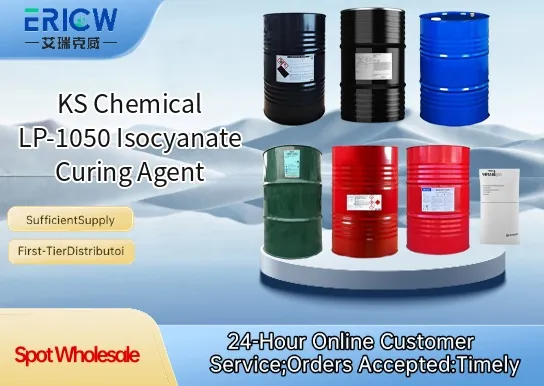
Low-viscosity aliphatic polyisocyanate offering excellent storage stability and extended pot life.
Non-yellowing performance ideal for UV-sensitive and premium-appearance coatings.
Reacts efficiently with hydroxyl-functional resins (e.g., polyester, acrylic, polyether polyols) at ambient or elevated temperatures.
Complies with REACH and meets VOC-reduced formulation requirements for industrial coatings.
Consistent batch-to-batch quality ensured through rigorous in-house QC testing and ISO 9001-certified manufacturing.
Automotive clearcoats and refinish topcoats requiring high gloss and long-term color retention.
Industrial maintenance coatings for metal substrates including machinery, railcars, and agricultural equipment.
Architectural and decorative PU coatings for aluminum composite panels (ACPs) and extruded profiles.
High-performance wood finishes where clarity, hardness, and chemical resistance are critical.
Plastic coatings for automotive interior trim and consumer electronics housings.
| Chemical Type | Aliphatic polyisocyanate (hexamethylene diisocyanate trimer, HDI-based) |
| Product Form | Liquid |
| Appearance | Clear, pale yellow to colorless liquid |
| NCO Content (wt%) | 18.5–19.2% |
| Viscosity @ 25°C (mPa·s) | 800–1,200 |
| Density @ 25°C (g/cm³) | 1.17–1.19 |
| Flash Point (°C, closed cup) | 135–142 |
| Primary Applications | Two-component polyurethane coatings and adhesives |
Q1: What types of resins is LP-1050 compatible with?
A: LP-1050 is specifically designed for use with hydroxyl-functional acrylics, polyesters, and alkyd resins in two-component coating systems. It exhibits good reactivity and compatibility across a range of solventborne and high-solids formulations.
Q2: How does LP-1050 compare to traditional HDI-based curing agents in terms of pot life and film formation?
A: LP-1050 offers extended pot life under ambient conditions compared to many conventional aliphatic isocyanate blends, supporting improved application flexibility. It also promotes rapid initial cure development and excellent through-cure at moderate bake temperatures or ambient post-cure conditions.
Q3: What are the recommended storage conditions for LP-1050?
A: Store LP-1050 in tightly sealed original containers in a cool, dry, well-ventilated area away from moisture, heat sources, and direct sunlight. Prolonged exposure to humidity may lead to premature reaction or viscosity increase.
Q4: Can LP-1050 be used in low-VOC or water-reducible systems?
A: Yes — LP-1050 is formulated to support low-VOC compliance and has been successfully incorporated into water-reducible hybrid systems when paired with appropriate emulsifiers and co-solvents. Compatibility testing under target formulation conditions is recommended prior to scale-up.
Contact With Us:
E-mail: wangxingqiang@ericwchem.com
Have a Questions? Call Us:
Add:
Building A1, Jiete Industrial Park, Huangpu District, Guangzhou City, Guangdong Province, China