English
 Español
 tiếng việt
 русский
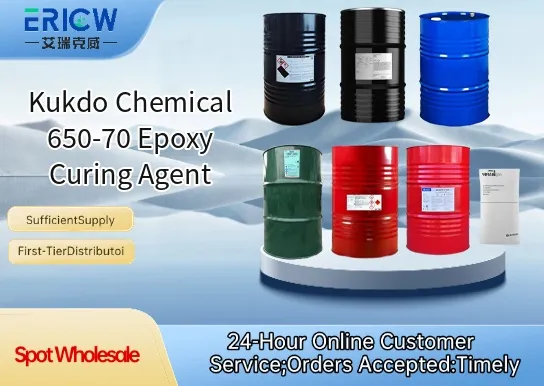
Fast-reacting aliphatic amine-based curing agent for rapid ambient-cure epoxy systems.
Excellent compatibility with standard liquid and solid bisphenol-A epoxy resins.
Low viscosity enables easy metering, mixing, and improved wetting of fillers and reinforcements.
Provides high crosslink density, resulting in superior chemical resistance and mechanical strength.
Low volatility and reduced amine odor compared to conventional aliphatic amines, improving workplace safety.
Structural adhesives for automotive and aerospace assembly.
High-performance coating systems for industrial flooring and tank linings.
Electrical encapsulation and potting compounds for power electronics.
Composite matrix resins in pultrusion and filament winding processes.
Rapid-turnaround repair mortars and grouts for civil infrastructure.
| Chemical Type | Aliphatic polyamine adduct |
| Product Form | Liquid |
| Appearance | Pale yellow to amber clear liquid |
| Viscosity (25°C) | 200–400 cP |
| Amine Value | 380–420 mg KOH/g |
| Density (25°C) | 0.92–0.96 g/cm³ |
| Primary Applications | Ambient-cure structural adhesives, coatings, composites, encapsulants |
| Key Features | Fast cure, low odor, low viscosity, high reactivity with DGEBA resins |
Q1: What is the primary chemical class of Kukdo 650-70?
A: Kukdo 650-70 is a modified aliphatic amine-based epoxy curing agent, engineered for enhanced reactivity control and reduced volatility compared to conventional amines.
Q2: How does 650-70 perform in low-temperature or high-humidity curing conditions?
A: It demonstrates improved moisture tolerance and reliable cure initiation at temperatures as low as 5–10°C, making it suitable for ambient-cure industrial coatings and adhesives where strict climate control is not feasible.
Q3: Is 650-70 compatible with standard bisphenol-A and bisphenol-F epoxy resins?
A: Yes — it is broadly compatible with common liquid and solid epoxy resins, including DGEBA and DGEBF types, and delivers balanced pot life and through-cure performance across a range of resin molecular weights.
Q4: What safety and handling considerations apply to this curing agent?
A: As with most amine-based hardeners, 650-70 requires appropriate personal protective equipment (PPE) during handling. It has lower vapor pressure than unmodified aliphatic amines, reducing inhalation risk, but skin contact should be avoided due to potential sensitization.
Q5: How is the recommended dosage determined for a given formulation?
A: Dosage depends on the specific epoxy resin type, desired cure profile, and end-use requirements. It is typically used at low concentrations relative to resin weight and is best optimized through small-scale compatibility and cure testing under application-relevant conditions.
Contact With Us:
E-mail: wangxingqiang@ericwchem.com
Have a Questions? Call Us:
Add:
Building A1, Jiete Industrial Park, Huangpu District, Guangzhou City, Guangdong Province, China