English
 Español
 tiếng việt
 русский
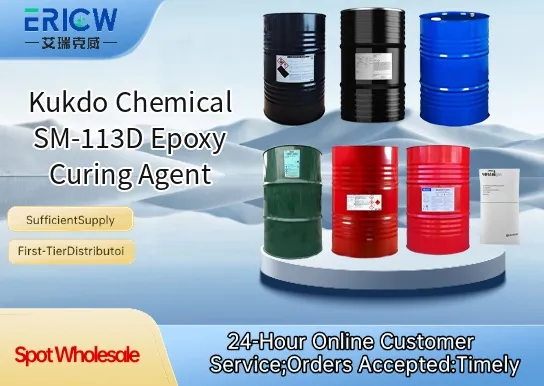
Low-viscosity liquid formulation for excellent processability and easy metering.
Fast ambient-cure capability with good pot life balance for efficient production workflows.
High heat resistance and thermal stability in cured epoxy systems.
Superior adhesion to metals, composites, and cured epoxy substrates.
Low volatility and low odor—supports safer handling and improved workplace air quality.
Structural adhesives for automotive and transportation assembly.
Electrical encapsulants and potting compounds for power electronics.
Composite matrix resins for wind turbine blades and aerospace components.
High-performance flooring and industrial coatings requiring rapid turnaround.
Repair mortars and grouts for civil infrastructure rehabilitation.
| Chemical Type | Amine-based aliphatic polyamine adduct |
| Product Form | Liquid |
| Appearance | Clear to pale yellow transparent liquid |
| Density (25°C) | 0.92–0.96 g/cm³ |
| Viscosity (25°C) | 250–400 mPa·s |
| Amine Value | 380–420 mg KOH/g |
| Flash Point (COC) | ≥120°C |
| Storage Stability | ≥12 months at 5–30°C in sealed container |
Q1: What is the primary chemical class of SM-113D?
A: SM-113D is a modified aliphatic amine-based epoxy curing agent, engineered to provide balanced reactivity, low volatility, and reduced skin sensitization potential compared to conventional primary amines.
Q2: How does SM-113D perform in high-humidity or ambient-cure applications?
A: SM-113D exhibits good moisture tolerance and enables reliable ambient-cure performance in coating and adhesive formulations, even under moderate humidity conditions—making it suitable for field-applied industrial maintenance systems.
Q3: Is SM-113D compatible with standard diglycidyl ether of bisphenol-A (DGEBA) resins?
A: Yes, SM-113D is fully compatible with conventional DGEBA-type epoxy resins and demonstrates excellent miscibility, gel time control, and final film hardness development across a broad range of molecular weights.
Q4: What safety and handling considerations apply to SM-113D?
A: As with all amine-functional curing agents, SM-113D requires appropriate personal protective equipment (PPE) during handling. It has lower vapor pressure than many unmodified amines, but skin contact should be avoided, and adequate ventilation is recommended during mixing and application.
Q5: What is the typical dosage range for SM-113D in epoxy formulations?
A: Dosage depends on the specific epoxy resin, desired pot life, and end-use requirements, but SM-113D is typically used at low concentrations—generally ranging from 0.1% to 2% by weight relative to the resin solids.
Contact With Us:
E-mail: wangxingqiang@ericwchem.com
Have a Questions? Call Us:
Add:
Building A1, Jiete Industrial Park, Huangpu District, Guangzhou City, Guangdong Province, China