English
 Español
 tiếng việt
 русский
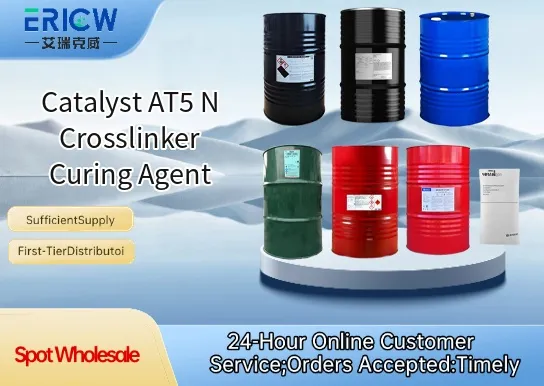
Highly efficient nitrogen-based crosslinking catalyst for rapid urethane and polyurea cure kinetics.
Excellent compatibility with aliphatic and aromatic isocyanates, enabling broad formulation flexibility.
Low volatility and minimal odor—supports safer handling and improved workplace air quality.
Thermal stability up to 180 °C, maintaining catalytic activity during elevated-cure processing.
Non-corrosive to common industrial equipment and compatible with standard metering/mixing systems.
Automotive underbody coatings and chassis protection systems.
Industrial elastomeric linings for chemical storage tanks and secondary containment.
Fast-cure spray polyurea roof membranes and waterproofing membranes.
High-performance sealants and gasketing compounds requiring short demold times.
Rigid and flexible polyurethane foam systems for insulation and packaging applications.
| Chemical Type | Tertiary amine derivative (N,N-dialkyl substituted) |
| Product Form | Liquid |
| Appearance | Clear, pale yellow to amber liquid |
| Density (25 °C) | 0.92–0.94 g/cm³ |
| Viscosity (25 °C) | 15–25 mPa·s |
| Flash Point (COC) | ≥110 °C |
| pH (1% aqueous solution) | 10.2–10.8 |
| Storage Stability | ≥12 months in unopened original container at 5–30 °C |
Q1: What is the primary function of Catalyst AT5 N in coating and adhesive formulations?
A: Catalyst AT5 N functions as a reactive crosslinker and curing agent, enabling covalent bond formation between polymer chains—particularly in hydroxyl- or amine-functional systems—to enhance final film hardness, chemical resistance, and thermal stability.
Q2: Which resin systems is Catalyst AT5 N typically compatible with?
A: It demonstrates good reactivity with polyester, acrylic, and polyurethane resins containing hydroxyl, carboxyl, or secondary amine groups. Compatibility should be verified experimentally in each specific formulation due to sensitivity to pH, solvent polarity, and steric effects.
Q3: How does Catalyst AT5 N influence cure speed and pot life?
A: It provides balanced reactivity—accelerating ambient or low-bake cure without excessively shortening working time. Pot life is formulation-dependent but generally remains suitable for industrial spray or roll-coating processes when used at recommended levels.
Q4: Is Catalyst AT5 N suitable for low-VOC or high-solids applications?
A: Yes—it is designed for compatibility with modern low-VOC and high-solids systems, offering efficient crosslinking with minimal volatile by-products under standard curing conditions.
Contact With Us:
E-mail: wangxingqiang@ericwchem.com
Have a Questions? Call Us:
Add:
Building A1, Jiete Industrial Park, Huangpu District, Guangzhou City, Guangdong Province, China