English
 Español
 tiếng việt
 русский
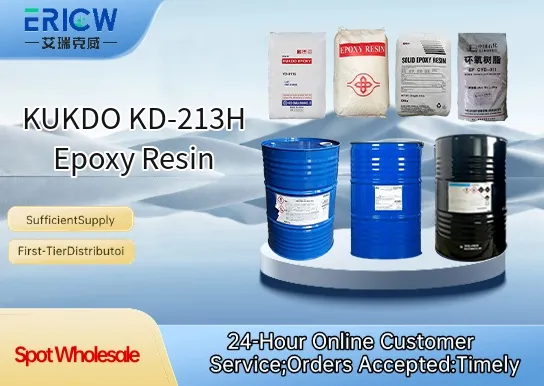
High reactivity with amine and anhydride curing agents for rapid gelation and short cycle times.
Excellent adhesion to metals, composites, and treated plastics under demanding environmental conditions.
Low viscosity (12,000–15,000 cP at 25°C) enabling easy processing, impregnation, and void-free casting.
Superior electrical insulation properties with high dielectric strength and volume resistivity.
Good thermal stability with glass transition temperature (Tg) of approx. 125–135°C after full cure.
Electrical encapsulation of transformers, reactors, and high-voltage insulators.
Structural bonding in aerospace composite assemblies and wind turbine blade root joints.
High-performance potting compounds for automotive sensors and power electronics modules.
Matrix resin for filament-wound pressure vessels and carbon fiber reinforced structural components.
Underfill and glob-top materials for semiconductor packaging requiring low stress and high reliability.
| Chemical Type | Bisphenol-A based liquid epoxy resin |
| Product Form | Clear to pale yellow viscous liquid |
| Appearance | Homogeneous, transparent, free from gels or sediment |
| Epoxy Equivalent Weight (EEW) | 188–194 g/eq |
| Viscosity (25°C) | 12,000–15,000 cP |
| Chloride Content | ≤ 800 ppm |
| Volatiles Content | ≤ 0.3 wt% |
| Storage Stability | 12 months at ≤ 25°C in sealed original container |
Q1: What is the primary application of KD-213H in epoxy systems?
A: KD-213H is a liquid bisphenol-A based epoxy resin designed primarily as a reactive diluent and viscosity modifier in high-performance coating, adhesive, and composite formulations. It helps improve workability and film formation without significantly compromising crosslink density or chemical resistance.
Q2: How does KD-213H compare to conventional epoxy resins in terms of reactivity and cure profile?
A: KD-213H exhibits moderate reactivity—higher than standard DGEBA resins due to its lower molecular weight and reduced steric hindrance, but lower than highly reactive novolac or glycidylamine types. It typically cures effectively with common amine or anhydride hardeners under ambient or elevated temperature conditions, supporting flexible formulation tuning.
Q3: Is KD-213H suitable for use in food-contact or potable water applications?
A: KD-213H is not pre-certified for direct food-contact or potable water applications. Its suitability depends on full system validation—including final cured formulation, processing conditions, and compliance testing per applicable regional regulations. Customers must conduct thorough end-use evaluation and obtain necessary regulatory approvals before deployment in such sensitive applications.
Q4: What are the recommended storage conditions for KD-213H?
A: Store KD-213H in tightly sealed original containers at temperatures between 10 °C and 30 °C, away from moisture, direct sunlight, and strong oxidizing agents. Prolonged exposure to low temperatures may cause crystallization, which is reversible upon gentle warming to 40–50 °C with thorough mixing. Avoid repeated freeze-thaw cycles.
Contact With Us:
E-mail: wangxingqiang@ericwchem.com
Have a Questions? Call Us:
Add:
Building A1, Jiete Industrial Park, Huangpu District, Guangzhou City, Guangdong Province, China