English
 Español
 tiếng việt
 русский
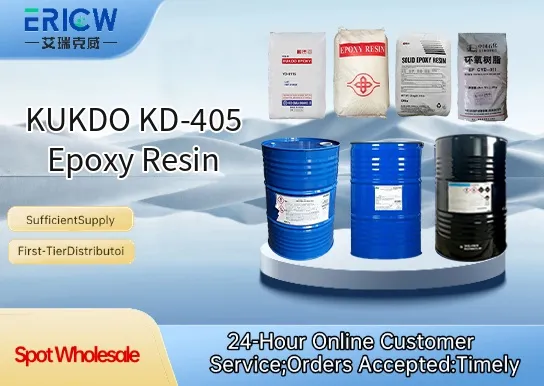
High reactivity with standard amine and anhydride hardeners for rapid cure at ambient or elevated temperatures.
Excellent adhesion to metals, composites, and treated plastics without requiring primers.
Low viscosity (12,000–15,000 cP at 25°C) enabling easy processing via casting, impregnation, and filament winding.
Superior electrical insulation properties with high dielectric strength and volume resistivity.
Good chemical resistance to dilute acids, alkalis, and aliphatic hydrocarbons after full cure.
Electrical encapsulation of transformers, reactors, and medium-voltage insulators.
Structural bonding in wind turbine blade assembly and automotive composite components.
Matrix resin for glass-fiber reinforced laminates used in marine and industrial corrosion-resistant linings.
High-performance potting compounds for power electronics and LED lighting modules.
| Chemical Type | Bisphenol-A based liquid epoxy resin |
| Product Form | Clear to pale yellow low-viscosity liquid |
| Appearance | Transparent, slightly viscous liquid, free from gels or sediment |
| Epoxy Equivalent Weight (EEW) | 185–192 g/eq |
| Viscosity (25°C) | 12,000–15,000 cP |
| Softening Point | Not applicable (liquid at room temperature) |
| Density (25°C) | 1.16–1.18 g/cm³ |
| Primary Applications | Encapsulation, laminating, adhesive bonding, and composite matrix |
Q1: What is the primary functional role of KD-405 in epoxy formulations?
A: KD-405 is a reactive liquid epoxy resin modifier designed to reduce system viscosity, improve flexibility, and enhance compatibility with various curing agents—without significantly compromising thermal stability or chemical resistance.
Q2: Is KD-405 suitable for use in high-gloss coatings or electrical encapsulation applications?
A: Yes—its low volatility, good miscibility with standard DGEBA resins, and ability to yield homogeneous cured films make it well-suited for decorative coatings, potting compounds, and insulating varnishes where clarity, adhesion, and dielectric performance are important.
Q3: How does KD-405 compare to conventional diluents like butyl glycidyl ether (BGE) in terms of reactivity and safety profile?
A: Unlike non-reactive or highly volatile diluents, KD-405 participates directly in the epoxy cure network, eliminating concerns about outgassing or plasticizer migration. It also exhibits lower skin sensitization potential and reduced volatility compared to many monofunctional glycidyl ethers.
Q4: Can KD-405 be used in combination with amine-based hardeners?
A: Yes—it demonstrates broad compatibility with aliphatic, cycloaliphatic, and aromatic amines, and typically requires no special handling adjustments when incorporated into standard amine-cured systems.
Contact With Us:
E-mail: wangxingqiang@ericwchem.com
Have a Questions? Call Us:
Add:
Building A1, Jiete Industrial Park, Huangpu District, Guangzhou City, Guangdong Province, China