English
 Español
 tiếng việt
 русский
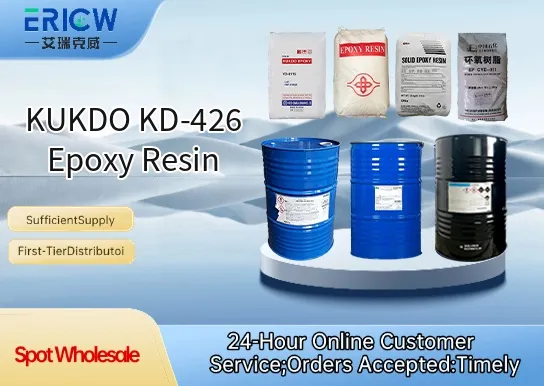
High reactivity with amine and anhydride curing agents for rapid gelation and short cycle times.
Excellent adhesion to metals, composites, and treated plastics without primer requirement.
Low viscosity (12,000–15,000 cP at 25°C) enabling easy processing via casting, impregnation, and filament winding.
Superior electrical insulation properties with high dielectric strength (>18 kV/mm) and volume resistivity (>1 × 10¹³ Ω·cm).
Good chemical resistance to weak acids, alkalis, and aliphatic solvents after full cure.
Electrical encapsulation of transformers, reactors, and medium-voltage insulators.
Structural bonding in wind turbine blade assembly and aerospace composite components.
High-performance potting compounds for power electronics and EV battery modules.
Matrix resin for glass-fiber reinforced laminates used in marine and industrial tanks.
Tooling and mold-making resins requiring dimensional stability and low exotherm.
| Chemical Type | Bisphenol-F based liquid epoxy resin |
| Product Form | Clear to pale yellow viscous liquid |
| Appearance | Homogeneous, transparent, free from gels or sediment |
| Epoxy Equivalent Weight (EEW) | 175–185 g/eq |
| Viscosity (25°C) | 12,000–15,000 cP |
| Chloride Content | ≤ 500 ppm |
| Softening Point | Not applicable (liquid at room temperature) |
| Storage Stability | ≥ 12 months at ≤ 25°C in sealed original container |
Q1: What is the primary application field for KD-426?
A: KD-426 is a liquid bisphenol-A-based epoxy resin designed primarily for high-performance composite laminates, electrical encapsulation, and structural adhesives where excellent mechanical strength, chemical resistance, and thermal stability are required.
Q2: Is KD-426 compatible with common amine and anhydride curing agents?
A: Yes, KD-426 exhibits broad compatibility with standard aliphatic and aromatic amines, as well as cyclic anhydrides. Optimal cure profiles depend on the selected hardener and intended end-use performance requirements.
Q3: How should KD-426 be stored to maintain its stability?
A: Store in original sealed containers at temperatures between 15°C and 25°C, away from direct sunlight and moisture. Prolonged exposure to elevated temperatures or humidity may affect viscosity and reactivity over time.
Q4: Does KD-426 require special handling during processing?
A: As with most epoxy resins, appropriate personal protective equipment—including nitrile gloves, safety goggles, and adequate ventilation—is recommended during handling and mixing to minimize skin contact and inhalation of vapors or aerosols.
Contact With Us:
E-mail: wangxingqiang@ericwchem.com
Have a Questions? Call Us:
Add:
Building A1, Jiete Industrial Park, Huangpu District, Guangzhou City, Guangdong Province, China