English
 Español
 tiếng việt
 русский
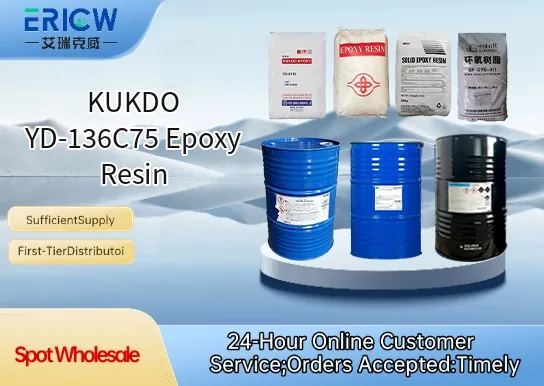
High-purity bisphenol-A based liquid epoxy resin with low ionic impurities for enhanced electrical insulation performance.
Optimized viscosity (12,000–14,000 cP at 25°C) enabling excellent processability in casting, potting, and impregnation applications.
Superior thermal stability with glass transition temperature (Tg) up to 175°C after full curing with standard amine hardeners.
Low chlorine content (< 900 ppm), supporting compliance with stringent electronics and aerospace material specifications.
Consistent molecular weight distribution ensuring reproducible reactivity and cured mechanical properties.
High-voltage electrical insulation systems for transformers, bushings, and switchgear.
Encapsulation and potting of power electronics modules including IGBTs and EV inverters.
Structural adhesive formulations requiring high thermal and chemical resistance.
Prepreg and laminates for printed circuit board (PCB) substrates in demanding environments.
Wind turbine blade bonding adhesives and composite matrix resins.
| Chemical Type | Bisphenol-A epoxy resin |
| Product Form | Clear, pale yellow liquid |
| Appearance | Transparent, homogeneous liquid without sediment or haze |
| Epoxy Equivalent Weight (EEW) | 185–192 g/eq |
| Viscosity (25°C) | 12,000–14,000 cP |
| Chlorine Content | ≤ 900 ppm |
| Volatiles (150°C, 2 hrs) | ≤ 0.3 wt% |
| Softening Point | Not applicable (liquid at room temperature) |
Q1: What is the primary application of KUKDO YD-136C75 epoxy resin?
A: KUKDO YD-136C75 is a liquid bisphenol-A type epoxy resin primarily used as a reactive diluent and viscosity modifier in high-performance coating, adhesive, and composite formulations—especially where improved flow, reduced shrinkage, and enhanced crosslink density are required.
Q2: How does YD-136C75 differ from standard DGEBA resins like YD-128 or YD-138?
A: Unlike conventional diglycidyl ether of bisphenol-A (DGEBA) resins, YD-136C75 features a modified molecular structure that delivers lower viscosity at equivalent epoxide equivalent weight (EEW), improved compatibility with various curing agents, and enhanced flexibility in cured networks without sacrificing thermal stability.
Q3: Which curing agents are commonly compatible with YD-136C75?
A: YD-136C75 exhibits broad compatibility with amine-based hardeners (e.g., aliphatic, cycloaliphatic, and aromatic amines), anhydrides, and catalytic systems such as BF₃ complexes or tertiary amines—making it suitable for both ambient-cure and elevated-temperature cure applications.
Q4: Is YD-136C75 suitable for food-contact or potable water applications?
A: YD-136C75 is not pre-qualified for direct food-contact or potable water applications. Its suitability must be evaluated case-by-case based on final formulation, full curing conditions, and compliance testing against relevant regional regulatory frameworks.
Contact With Us:
E-mail: wangxingqiang@ericwchem.com
Have a Questions? Call Us:
Add:
Building A1, Jiete Industrial Park, Huangpu District, Guangzhou City, Guangdong Province, China