English
 Español
 tiếng việt
 русский
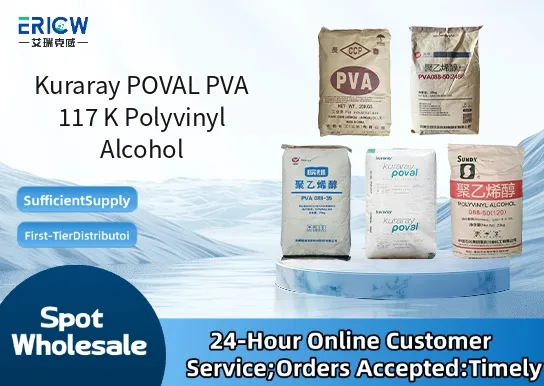
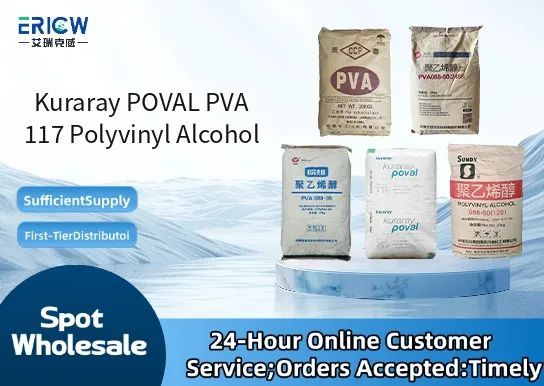
High water solubility with rapid dissolution in cold and warm water.
Excellent film-forming capability yielding transparent, flexible, and strong films.
Superior adhesion to polar substrates including paper, cellulose, metals, and ceramics.
Low residual acetaldehyde content, ensuring high purity and suitability for sensitive applications.
Consistent batch-to-batch performance backed by Kuraray’s stringent quality control standards.
Water-soluble packaging films for detergent pods and agrochemical encapsulation.
Binder for ceramic green bodies and refractory castables in advanced manufacturing.
Adhesive component in specialty paper coatings and laminating formulations.
Thickener and stabilizer in aqueous pigment dispersions for inkjet and textile printing.
Protective colloid in emulsion polymerization of vinyl acetate and acrylic monomers.
| Chemical Type | Polyvinyl alcohol (partially hydrolyzed) |
| Product Form | White granular or powder |
| Appearance | Free-flowing white granules |
| Saponification Degree | 87–89 mol% |
| Viscosity (4% aqueous solution at 20°C) | 16–18 mPa·s |
| Residual Acetate Content | ≤13.5 mol% |
| pH (1% aqueous solution) | 5.5–6.5 |
| Volatile Matter (105°C, 2 h) | ≤5.0 wt% |
Q1: What distinguishes POVAL PVA 117 K from other polyvinyl alcohol grades?
A: POVAL PVA 117 K is a fully hydrolyzed, high-viscosity grade with excellent film-forming capability, water solubility, and adhesion to polar substrates. Its balanced molecular weight and hydrolysis degree make it particularly suitable for applications requiring robust mechanical film integrity and controlled dissolution profiles—such as binder systems in ceramics, textile sizing, or water-soluble packaging films.
Q2: How should POVAL PVA 117 K be dissolved for optimal performance?
A: For complete dissolution, gradual dispersion in cold water followed by gentle heating to 80–90 °C is recommended. Avoid direct addition of powder to boiling water, which may cause surface gelation and incomplete hydration. Stirring must be consistent and sufficient to prevent agglomeration. Complete dissolution typically requires 30–60 minutes depending on concentration and mixing efficiency.
Q3: Is POVAL PVA 117 K compatible with common industrial additives like plasticizers or crosslinkers?
A: Yes—it shows good compatibility with glycerol, ethylene glycol, and other low-molecular-weight plasticizers, which help improve flexibility and reduce brittleness in dried films. It can also be crosslinked with aldehydes (e.g., formaldehyde or glyoxal) or borax under controlled conditions to enhance water resistance—though crosslinking density and final properties depend heavily on process parameters and formulation balance.
Q4: Can POVAL PVA 117 K be used in food-contact or pharmaceutical applications?
A: POVAL PVA 117 K is manufactured under stringent quality control and is widely employed in formulations intended for indirect food-contact applications—such as water-soluble laundry pods or tablet binders—where regulatory compliance is verified by the end-user’s qualified safety assessment. Final suitability depends on full formulation evaluation and adherence to applicable regional regulatory requirements.
Contact With Us:
E-mail: wangxingqiang@ericwchem.com
Have a Questions? Call Us:
Add:
Building A1, Jiete Industrial Park, Huangpu District, Guangzhou City, Guangdong Province, China