English
 Español
 tiếng việt
 русский
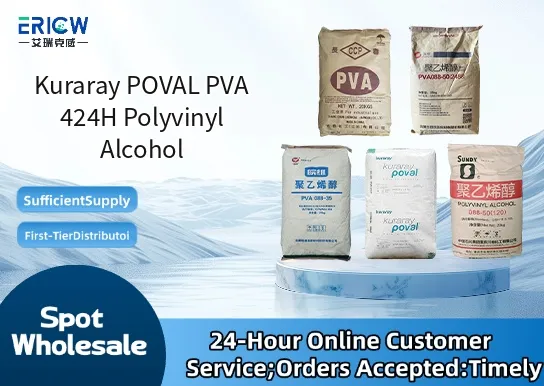
High water solubility with rapid dissolution in cold and warm water.
Excellent film-forming capability yielding transparent, flexible, and strong films.
Superior adhesion to polar substrates including paper, cellulose, metals, and ceramics.
Good compatibility with starch, acrylics, and other water-soluble polymers.
Controlled hydrolysis degree (≈88 mol%) offering balanced water resistance and biodegradability.
Water-soluble packaging films for detergent pods and agrochemical encapsulation.
Binders for ceramic and metal powder injection molding (PIM/MIM) feedstocks.
Size agents and surface modifiers in high-performance paper and textile coating.
Dispersants and stabilizers in pigment pastes and aqueous pigment dispersions.
Thickening and rheology modifiers in construction adhesives and tile-setting mortars.
| Chemical Type | Polyvinyl alcohol (partially hydrolyzed) |
| Product Form | White granular or flake solid |
| Appearance | Free-flowing, odorless white particles |
| Hydrolysis Degree | Approx. 88 mol% |
| Viscosity (4% aqueous solution at 20°C) | 4.2–4.6 mPa·s |
| pH (5% aqueous solution) | 5.0–7.0 |
| Volatile Matter (105°C, 2 hrs) | ≤ 5.0 wt% |
| Ash Content | ≤ 0.5 wt% |
Q1: What distinguishes POVAL PVA 424H from other polyvinyl alcohol grades?
A: POVAL PVA 424H is a fully hydrolyzed, high-viscosity grade designed for applications requiring strong film-forming capability, excellent adhesion to polar substrates, and robust aqueous solution stability. Its balanced molecular weight and hydrolysis degree support consistent rheology and cohesive strength in demanding formulations.
Q2: Is POVAL PVA 424H suitable for use in water-soluble packaging films?
A: Yes — it is commonly selected for water-soluble packaging applications due to its high water solubility, mechanical integrity in dry films, and compatibility with plasticizers and crosslinkers used to tune dissolution rate and humidity resistance.
Q3: How should POVAL PVA 424H be dissolved for optimal performance?
A: Dissolution is typically achieved by gradual dispersion into cold water followed by heating to 85–95°C under gentle agitation until fully clear and homogeneous. Avoid direct addition of powder to boiling water to prevent surface gelation and incomplete hydration.
Q4: Can POVAL PVA 424H be used in adhesive formulations for paper and board bonding?
A: Yes — it serves as an effective base polymer in water-based adhesives for porous substrates, offering good wet tack, rapid setting, and strong dry bond strength. It is often blended with starch or synthetic latexes to enhance performance across varying humidity conditions.
Contact With Us:
E-mail: wangxingqiang@ericwchem.com
Have a Questions? Call Us:
Add:
Building A1, Jiete Industrial Park, Huangpu District, Guangzhou City, Guangdong Province, China