English
 Español
 tiếng việt
 русский
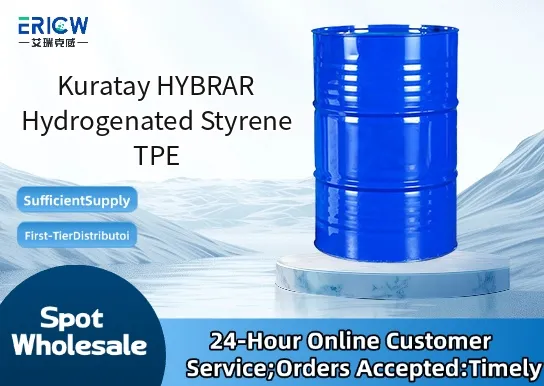
Exceptional UV and thermal stability due to full hydrogenation of the styrenic backbone.
Outstanding elasticity and recovery performance across a wide temperature range (−40 °C to 100 °C).
Excellent compatibility with polyolefins and engineering resins for alloy development.
Low extractables and high purity—suitable for medical device components and food-contact applications.
Good processability via injection molding, extrusion, and overmolding without pre-drying.
Soft-touch grips and ergonomic overmolds for power tools and consumer electronics.
Seals, gaskets, and diaphragms in automotive fluid systems and HVAC components.
Medical tubing, syringe plungers, and non-latex elastomeric parts requiring biocompatibility.
Precision seals and vibration-damping elements in industrial automation equipment.
Food-grade flexible packaging films and closures compliant with FDA 21 CFR §177.2600.
| Chemical Type | Hydrogenated styrene–isoprene–styrene (SIS) triblock copolymer |
| Product Form | Pellets |
| Appearance | Translucent to opaque granules, free-flowing |
| Primary Applications | Elastomeric overmolding, soft-touch surfaces, precision sealing |
| Key Features | High resilience, low compression set, excellent weather resistance |
| Benefits | Reduced part weight vs. vulcanized rubber; recyclable thermoplastic processing |
| Processing Method | Injection molding, extrusion, two-shot molding |
| Regulatory Compliance | FDA 21 CFR §177.2600, ISO 10993–5 (cytotoxicity tested) |
Q1: What distinguishes HYBRAR from conventional styrenic thermoplastic elastomers (TPEs)?
A: HYBRAR is a selectively hydrogenated styrenic block copolymer, offering significantly improved thermal stability, UV resistance, and oxidative resistance compared to non-hydrogenated analogues like SBS or SEBS. Its saturated mid-block enhances long-term performance in demanding applications without compromising processability or soft-touch characteristics.
Q2: Is HYBRAR suitable for food-contact or medical-grade formulations?
A: HYBRAR grades are designed with high-purity monomers and controlled polymerization processes, supporting compliance with major global food-contact regulations when formulated appropriately. Final regulatory status depends on the full formulation, processing conditions, and end-use requirements — users should conduct full migration and biocompatibility testing as needed.
Q3: How does HYBRAR perform in overmolding applications onto polypropylene or polyethylene substrates?
A: HYBRAR exhibits excellent adhesion to semi-crystalline polyolefins—especially when used with appropriate compatibilizers or surface treatments. Its low melt viscosity and balanced polarity enable reliable bonding during two-shot molding, delivering durable, stress-resistant soft-touch grips and seals.
Q4: Can HYBRAR be compounded with fillers, plasticizers, or other polymers?
A: Yes—HYBRAR is highly compatible with common additives such as mineral fillers, silica, and non-migrating plasticizers. It also blends well with polyolefins, ethylene-vinyl acetate (EVA), and certain engineering resins to tailor hardness, elasticity, or cost-performance balance. Compatibility should always be verified via lab-scale trials due to formulation-specific interactions.
Contact With Us:
E-mail: wangxingqiang@ericwchem.com
Have a Questions? Call Us:
Add:
Building A1, Jiete Industrial Park, Huangpu District, Guangzhou City, Guangdong Province, China