English
 Español
 tiếng việt
 русский
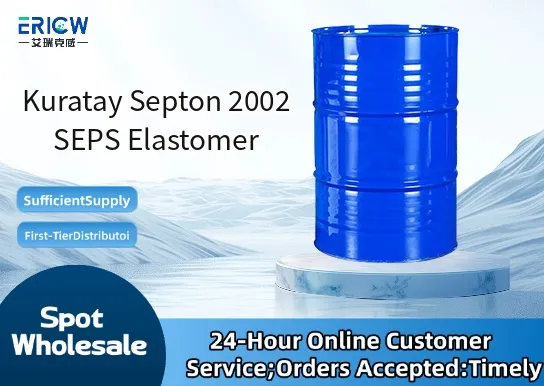
Thermoplastic elastomer based on styrene–ethylene/propylene–styrene (SEPS) triblock copolymer architecture.
Exceptional clarity and low haze, enabling high-optical-quality transparent applications.
Superior UV resistance and long-term weatherability without added stabilizers.
Low compression set and excellent elastic recovery at ambient and elevated temperatures.
Good compatibility with polyolefins and silicone oils, facilitating formulation flexibility.
Soft-touch overmolding for consumer electronics housings and automotive interior trim.
Transparent medical tubing and seals requiring biocompatibility and sterilization resistance.
High-clarity packaging films and blister packaging for pharmaceuticals and cosmetics.
Precision gaskets and vibration-damping components in optical and precision instrumentation.
| Chemical Type | Styrene–Ethylene/Propylene–Styrene (SEPS) Triblock Copolymer |
| Product Form | Pellets |
| Appearance | Translucent, off-white to light amber pellets |
| Primary Applications | Soft-touch materials, transparent elastomeric parts, medical-grade seals |
| Key Features | High clarity, low compression set, UV stability, thermoplastic processability |
| Benefits | Eliminates need for vulcanization; recyclable; compatible with injection molding and extrusion |
| Processing Method | Injection molding, extrusion, overmolding |
| Regulatory Status | Compliant with USP Class VI and ISO 10993-5 for medical device applications |
Q1: What is the primary advantage of Kuratay Septon 2002 over conventional SBS or SIS thermoplastic elastomers?
A: Kuratay Septon 2002 is a styrene–ethylene/propylene–styrene (SEPS) triblock copolymer offering superior thermal stability, oxidative resistance, and UV durability compared to SBS or SIS. Its saturated mid-block provides enhanced long-term performance in demanding applications such as medical tubing, soft-touch overmolding, and high-clarity sealants where aging resistance is critical.
Q2: Is Kuratay Septon 2002 suitable for medical or food-contact applications?
A: Kuratay Septon 2002 is widely used in medical device components and food-contact-adjacent applications due to its low extractables profile and compatibility with common sterilization methods (e.g., gamma, ETO). While final regulatory compliance depends on the full formulation and processing conditions, the polymer itself meets typical requirements for USP Class VI and ISO 10993 biocompatibility screening when appropriately compounded.
Q3: How does processing temperature affect the performance of Kuratay Septon 2002 during extrusion or injection molding?
A: Kuratay Septon 2002 exhibits a relatively narrow optimal melt processing window—typically between 200 °C and 240 °C. Exceeding this range may lead to gradual degradation of the styrenic end-blocks, reducing tensile strength and elasticity. It is recommended to minimize residence time at peak temperatures and avoid prolonged thermal exposure to preserve its thermoplastic reversibility and mechanical integrity.
Q4: Can Kuratay Septon 2002 be blended with other polymers, and which compatibilizers are typically effective?
A: Yes, Kuratay Septon 2002 shows good miscibility with many non-polar resins (e.g., PP, PE, and certain polyolefin elastomers) and can be compatibilized with polar polymers using functionalized SEBS or maleic anhydride-grafted polyolefins. Compatibility should be verified experimentally, as phase morphology and interfacial adhesion strongly influence final mechanical and optical properties.
Contact With Us:
E-mail: wangxingqiang@ericwchem.com
Have a Questions? Call Us:
Add:
Building A1, Jiete Industrial Park, Huangpu District, Guangzhou City, Guangdong Province, China