English
 Español
 tiếng việt
 русский
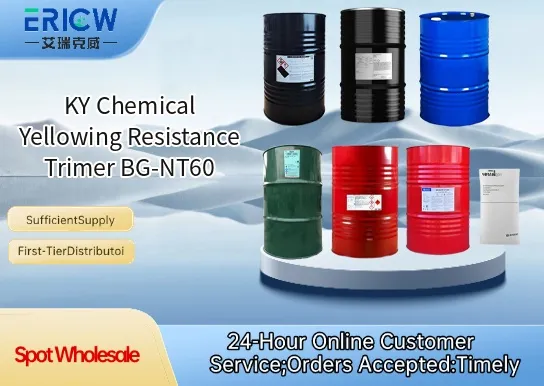
Highly effective yellowing inhibition for polyurethane and acrylic-based coatings and adhesives.
Thermally stable trimer structure ensures long-term performance under elevated curing temperatures.
Low volatility and excellent compatibility with common solvent- and water-based resin systems.
Non-migrating formulation prevents surface blooming and maintains optical clarity over time.
Compatible with standard industrial processing equipment and scalable for high-volume production.
Automotive interior trim coatings requiring UV and thermal stability.
High-gloss furniture and wood finishing systems exposed to indoor lighting.
Textile laminates and synthetic leather coatings demanding color fidelity.
Electronic device housing coatings where aesthetic consistency is critical.
Medical device housings requiring ISO 10993-compliant non-yellowing performance.
| Chemical Type | Trimerized hindered amine light stabilizer (HALS) derivative |
| Product Form | Powder |
| Appearance | White to off-white free-flowing crystalline powder |
| Primary Applications | Yellowing resistance in PU, acrylic, and polyester coatings, adhesives, and elastomers |
| Key Features | Non-phenolic, non-basic, low extractability |
| Benefits | Extended product lifetime, reduced maintenance, improved aesthetics retention |
| Storage Conditions | Store in cool, dry place below 30°C; protect from moisture and direct sunlight |
| Shelf Life | 24 months from date of manufacture when stored as recommended |
Q1: What is the primary function of BG-NT60 in polymer systems?
A: BG-NT60 is a specialized yellowing resistance trimer designed to inhibit photo-oxidative degradation and suppress discoloration—particularly yellowing—during processing and long-term service life of light-exposed polyurethane, acrylic, and polyester-based coatings, adhesives, and elastomers.
Q2: How does BG-NT60 differ from conventional HALS or UV absorbers?
A: Unlike monomeric HALS or benzotriazole-type UV absorbers, BG-NT60 features a thermally stable trimeric architecture that enhances compatibility with high-molecular-weight matrices and reduces volatility/migration risk. Its mechanism combines radical scavenging with synergistic stabilization of hydroperoxides, offering improved performance in demanding thermal and UV stress conditions.
Q3: Is BG-NT60 compatible with waterborne and solventborne systems?
A: Yes—BG-NT60 demonstrates broad compatibility across both solventborne formulations (e.g., aromatic and aliphatic hydrocarbons, esters, ketones) and waterborne dispersions, including anionic and nonionic polyurethane dispersions. Dispersibility may be optimized using standard high-shear mixing or mild heating during let-down.
Q4: What is the typical dosage range for effective yellowing suppression?
A: BG-NT60 is typically used at low concentrations—generally ranging from 0.1% to 2% by weight relative to the total resin solids—depending on substrate sensitivity, exposure conditions, and desired longevity. Optimal dosage should be determined through application-specific stability testing under accelerated aging protocols.
Q5: Does BG-NT60 affect cure kinetics or final film properties?
A: When incorporated within recommended dosage ranges, BG-NT60 shows minimal interference with common curing mechanisms—including isocyanate-hydroxyl reactions and free-radical polymerization—and maintains key film attributes such as hardness, flexibility, and gloss retention without inducing haze or surface defects.
Contact With Us:
E-mail: wangxingqiang@ericwchem.com
Have a Questions? Call Us:
Add:
Building A1, Jiete Industrial Park, Huangpu District, Guangzhou City, Guangdong Province, China