English
 Español
 tiếng việt
 русский
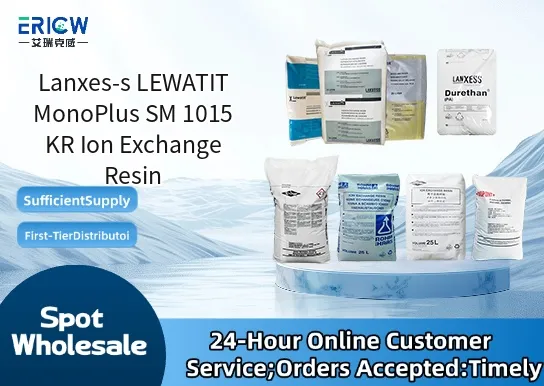
Highly uniform spherical beads with narrow particle size distribution for low pressure drop and consistent hydraulic performance.
Strong acid cation exchange resin in potassium form (K⁺), optimized for selective monovalent cation removal and softening.
Exceptional chemical and osmotic stability, enabling reliable operation across wide pH (0–14) and temperature ranges (up to 120 °C).
Low extractables and high regeneration efficiency, reducing rinse water consumption and operational costs.
Manufactured under strict GMP-compliant quality control, meeting ISO 9001 and REACH compliance requirements.
Potassium-selective polishing in pharmaceutical-grade purified water (PW) and water-for-injection (WFI) systems.
Hardness removal and sodium leakage control in high-purity boiler feedwater pretreatment.
Cation exchange layer in mixed-bed demineralizers for semiconductor ultrapure water (UPW) production.
Targeted potassium conditioning in food & beverage process water where sodium restriction is critical.
| Chemical Type | Strong acid cation exchanger (sulfonic acid group) |
| Product Form | Potassium form (K⁺) |
| Appearance | Uniform amber, spherical gel-type beads |
| Functional Group | –SO₃H |
| Ion Exchange Capacity (total, dry basis) | ≥ 4.8 eq/L (volumetric, K⁺ form) |
| Moisture Content | 46–50 % (as supplied) |
| Particle Size Range | 315–1250 µm (≥ 95 %) |
| Uniformity Coefficient | ≤ 1.6 |
Q1: What is the primary functional group and ionic form of LEWATIT MonoPlus SM 1015 KR?
A: LEWATIT MonoPlus SM 1015 KR is a strongly acidic cation exchange resin in the potassium (K⁺) form, featuring sulfonic acid functional groups grafted onto a highly crosslinked polystyrene-divinylbenzene matrix.
Q2: Is this resin suitable for food-grade or pharmaceutical water polishing applications?
A: Yes — LEWATIT MonoPlus SM 1015 KR is manufactured and tested to meet requirements for use in high-purity water systems, including those supporting pharmaceutical and food-contact applications, subject to proper validation and regeneration protocols per end-user specifications.
Q3: How does SM 1015 KR differ from standard gel-type strong acid cation resins?
A: As part of the MonoPlus series, SM 1015 KR offers uniform particle size distribution, enhanced kinetic performance, improved resistance to osmotic shock, and higher mechanical stability — making it especially well-suited for demanding service cycles and high-flow-rate polishing applications.
Q4: What regeneration chemicals are recommended for this resin?
A: Regeneration is typically performed using aqueous solutions of sodium chloride (NaCl) or hydrochloric acid (HCl), depending on the target ionic form and process requirements. Potassium form maintenance may involve KCl-based regeneration under specific operational conditions.
Contact With Us:
E-mail: wangxingqiang@ericwchem.com
Have a Questions? Call Us:
Add:
Building A1, Jiete Industrial Park, Huangpu District, Guangzhou City, Guangdong Province, China