English
 Español
 tiếng việt
 русский
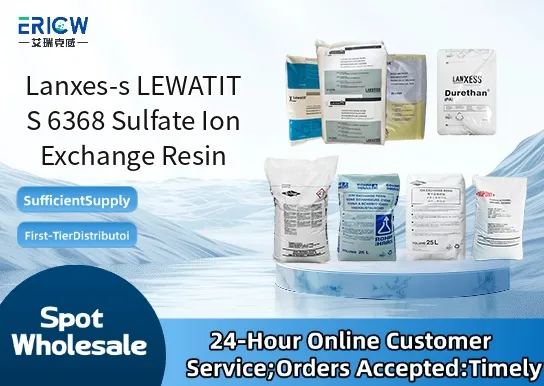
Highly selective for sulfate (SO₄²⁻) removal in the presence of competing anions such as chloride and nitrate.
Stable polyacrylate matrix ensures excellent physical and chemical durability under repeated regeneration cycles.
Optimized bead uniformity and narrow particle size distribution enhance hydraulic performance and reduce pressure drop.
Low soluble organic content minimizes leaching and meets stringent requirements for potable water treatment.
Compatible with standard sodium chloride brine regeneration, enabling cost-effective and operationally simple system integration.
Drinking water desulfation to meet regulatory sulfate limits (e.g., WHO and EPA guidelines).
Treatment of industrial process water in pharmaceutical and biotechnology manufacturing.
Pre-treatment for reverse osmosis systems to prevent gypsum scaling in high-sulfate feedwaters.
Removal of sulfate from boiler feedwater in power generation facilities.
Specialized wastewater polishing in metal finishing and mining effluent streams.
| Chemical Type | Strong-base anion exchange resin (Type I, quaternary ammonium functional group) |
| Product Form | Moist, spherical beads |
| Appearance | Amber, translucent beads |
| Primary Applications | Selective sulfate removal from drinking water and industrial process streams |
| Key Features | Sulfate selectivity > chloride selectivity; high chemical stability; low osmotic swelling |
| Regeneration Agent | Sodium chloride (NaCl) solution |
| Functional Group | Trimethylamine |
| Matrix Structure | Crosslinked polyacrylate |
Q1: What is the primary functional group and selectivity profile of LEWATIT S 6368?
A: LEWATIT S 6368 is a strongly basic anion exchange resin with quaternary ammonium functional groups (Type I), specifically engineered for high selectivity toward sulfate (SO₄²⁻) ions over competing anions such as chloride and nitrate — making it especially effective in sulfate removal and control applications.
Q2: Can LEWATIT S 6368 be used in potable water treatment systems?
A: Yes — LEWATIT S 6368 is commonly applied in drinking water treatment for targeted sulfate reduction, particularly where sulfate levels exceed aesthetic or regulatory thresholds. It complies with general requirements for ion exchange resins used in water contact applications, subject to local regulatory approval and proper system validation.
Q3: How does regeneration performance compare to standard strong base anion resins?
A: Due to its optimized matrix structure and functional group density, LEWATIT S 6368 demonstrates improved sulfate capacity retention over multiple regeneration cycles using conventional brine (NaCl) solutions, with reduced co-ion leakage and more consistent operational efficiency in continuous or batch-mode systems.
Q4: Is this resin suitable for use in high-sulfate industrial wastewater streams?
A: Yes — LEWATIT S 6368 is widely deployed in industrial effluent treatment, including mining, metallurgical, and chemical process streams, where selective sulfate removal is critical prior to discharge or reuse. Its robust physical stability supports reliable performance under variable flow rates and moderate organic fouling conditions.
Contact With Us:
E-mail: wangxingqiang@ericwchem.com
Have a Questions? Call Us:
Add:
Building A1, Jiete Industrial Park, Huangpu District, Guangzhou City, Guangdong Province, China