English
 Español
 tiếng việt
 русский
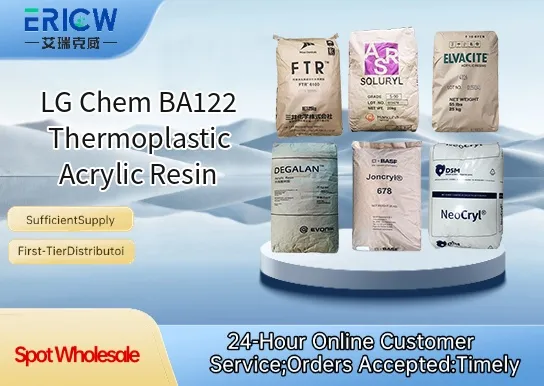
Excellent transparency and high gloss retention for premium optical clarity.
Superior weatherability and UV resistance, minimizing yellowing and embrittlement under outdoor exposure.
Good melt flow and thermal stability for reliable processing via extrusion and injection molding.
Outstanding compatibility with common plasticizers and impact modifiers for formulation flexibility.
Low moisture absorption, ensuring dimensional stability and consistent mechanical performance in humid environments.
Automotive exterior trim and light covers requiring long-term aesthetics and durability.
Architectural glazing and transparent façade elements for commercial buildings.
Consumer electronics housings and display bezels demanding scratch resistance and clarity.
Medical device components where biocompatibility-supportive processing and sterilization resistance are critical.
Signage and lighting diffusers requiring uniform light transmission and color fidelity.
| Chemical Type | Thermoplastic acrylic copolymer |
| Product Form | Pellets |
| Appearance | Translucent, free-flowing granules |
| Primary Applications | Exterior automotive parts, architectural glazing, lighting, signage |
| Key Features | High transparency, UV stability, melt processability, low moisture uptake |
| Benefits | Long-term aesthetic retention, reduced post-molding defects, formulation versatility |
| Density (g/cm³) | 1.18–1.20 (ASTM D792) |
| Melt Flow Rate (g/10 min, 230°C/3.8 kg) | 8–12 (ASTM D1238) |
Q1: What are the primary performance benefits of BA122 in thermoplastic formulations?
A: BA122 offers excellent clarity, UV stability, and melt processability, making it well-suited for enhancing surface gloss, weather resistance, and flow characteristics in transparent or pigmented thermoplastic compounds—especially where optical quality and long-term color retention are critical.
Q2: Is BA122 compatible with common engineering thermoplastics like ABS, PC, or polyolefins?
A: BA122 demonstrates good compatibility with ABS and polycarbonate, often used as a modifier to improve impact resistance and surface hardness. Compatibility with polyolefins is more limited and typically requires compatibilizers or careful formulation design to achieve stable dispersion.
Q3: How is BA122 typically incorporated into a compound—masterbatch or direct addition?
A: BA122 is commonly processed via direct addition during compounding due to its favorable thermal stability and low melt viscosity. It can also be supplied in masterbatch form for improved handling and dosing accuracy, particularly when targeting precise optical or mechanical property adjustments.
Q4: Does BA122 require drying before processing?
A: Yes—like most acrylic resins, BA122 is hygroscopic and should be dried prior to melt processing. Standard drying conditions (e.g., 70–80 °C for 2–4 hours under dehumidified air) are generally recommended to minimize moisture-related defects such as splay or reduced molecular weight.
Contact With Us:
E-mail: wangxingqiang@ericwchem.com
Have a Questions? Call Us:
Add:
Building A1, Jiete Industrial Park, Huangpu District, Guangzhou City, Guangdong Province, China