English
 Español
 tiếng việt
 русский
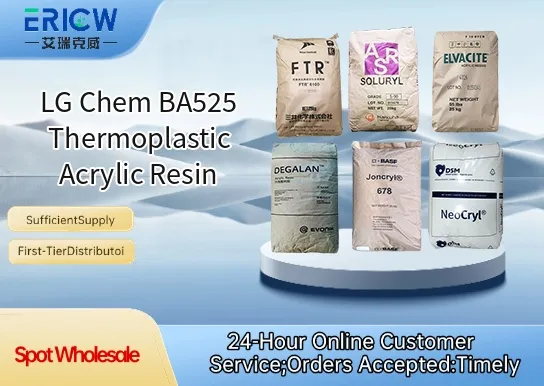
Excellent transparency and gloss retention under UV exposure and outdoor weathering.
High melt flow index enabling easy processing via extrusion, injection molding, and calendering.
Good compatibility with PVC, ABS, and other engineering thermoplastics for alloy formulation.
Low moisture absorption ensuring dimensional stability and consistent mechanical performance.
Non-yellowing thermal stability up to 180°C during short-term melt processing.
Automotive interior trim components requiring high-gloss, scratch-resistant surfaces.
Transparent protective layers for LED lighting housings and optical light guides.
Co-extruded decorative films for appliance panels and architectural cladding.
Blending modifier for impact-modified acrylic sheets used in signage and glazing.
| Chemical Type | Thermoplastic methyl methacrylate (MMA)-based copolymer |
| Product Form | Pellets |
| Appearance | Translucent white granules |
| Melt Flow Index (230°C / 3.8 kg) | 8–12 g/10 min |
| Density (23°C) | 1.17–1.19 g/cm³ |
| Moisture Content (as received) | ≤ 0.2 wt% |
| Vicat Softening Temperature | 102–106°C |
| Primary Applications | Surface enhancement, transparent alloys, thermoformed parts |
Q1: What are the primary processing methods suitable for BA525?
A: BA525 is designed for thermoplastic processing techniques including extrusion, injection molding, and solution coating. Its balanced melt viscosity and thermal stability support consistent flow and film formation under standard industrial conditions.
Q2: How does BA525 contribute to surface hardness and gloss in coatings?
A: As a thermoplastic acrylic resin, BA525 enhances surface hardness, scratch resistance, and optical clarity in clear coats and topcoats. Its molecular architecture promotes tight polymer chain packing, resulting in high-gloss, durable finishes without requiring crosslinking agents.
Q3: Is BA525 compatible with common solvent systems used in industrial coatings?
A: Yes — BA525 exhibits good solubility in typical organic solvent blends such as esters (e.g., butyl acetate), ketones (e.g., methyl ethyl ketone), and aromatic hydrocarbons (e.g., xylene), making it well-suited for conventional solvent-borne coating formulations.
Q4: Can BA525 be blended with other resins to modify performance?
A: BA525 demonstrates favorable compatibility with many thermoplastic and thermosetting resins—including cellulose derivatives, alkyds, and melamine-formaldehyde systems—enabling formulators to tailor flexibility, drying speed, and chemical resistance while maintaining clarity.
Contact With Us:
E-mail: wangxingqiang@ericwchem.com
Have a Questions? Call Us:
Add:
Building A1, Jiete Industrial Park, Huangpu District, Guangzhou City, Guangdong Province, China